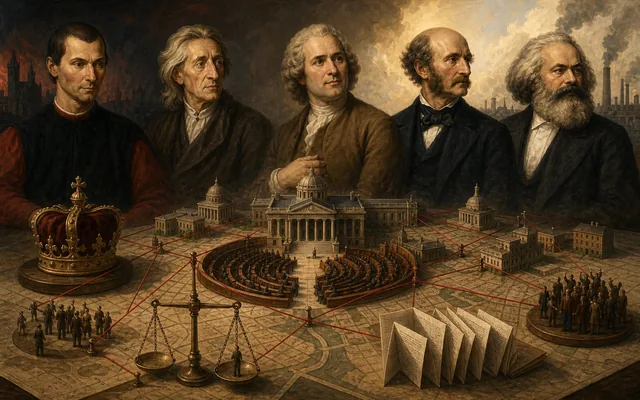
Power, Liberty, and the Modern State
Power, Liberty, and the Modern State
From Machiavelli's cold eye on power to constitutions, democracy, liberty, and radical critique.
Log in to start this path and track your progress.
- 1
 Step 1 · Still to read
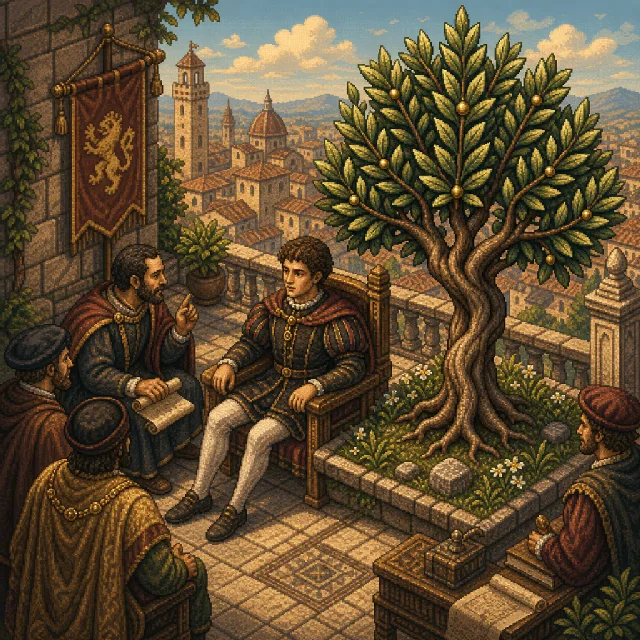
The Prince
Machiavelli describes power as it actually works, not as it ought to be.
- 2
 Step 2 · Still to read
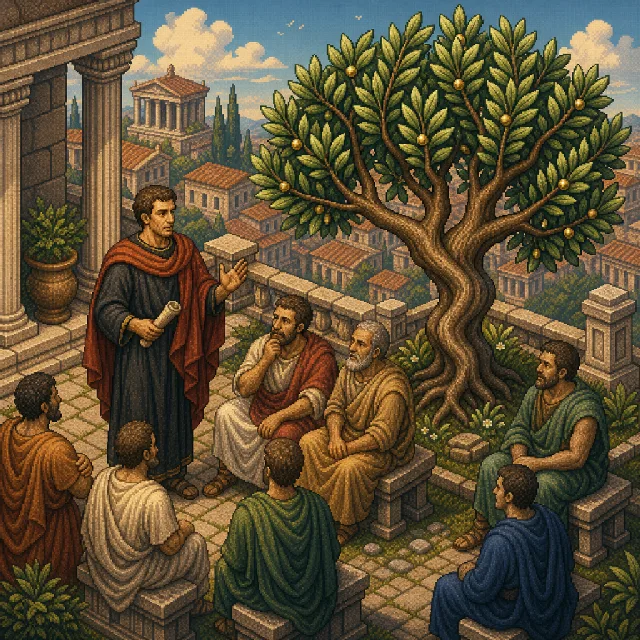
Discourses on Livy
The same Machiavelli now turns to Rome and asks how a free republic endures.
- 3
 Step 3 · Still to read
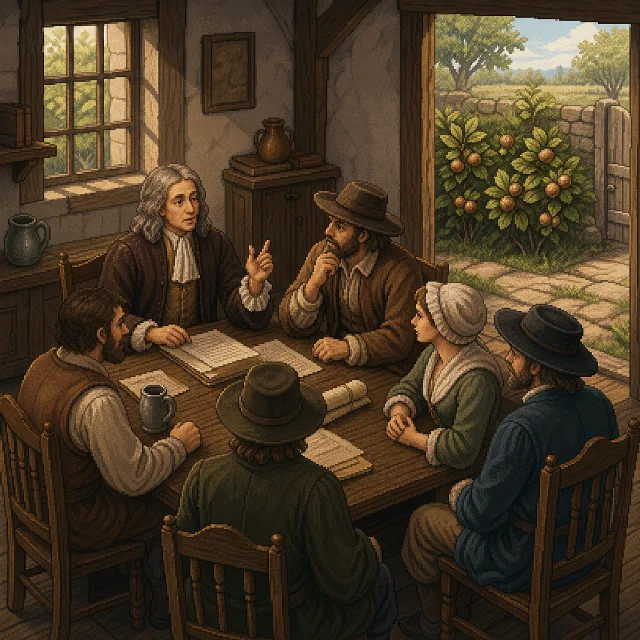
Second Treatise of Government
Locke shifts the ground of power: authority rests on the consent of the governed.
- 4
 Step 4 · Still to read
The Social Contract
Rousseau radicalizes the idea: freedom through the 'general will'.
- 5
 Step 5 · Still to read
The Federalist Papers
The Federalist Papers turn theory into design: power must check power.
- 6
 Step 6 · Still to read
Democracy in America
Tocqueville reads democracy as a culture: not only laws, but habits shape liberty.
- 7
 Step 7 · Still to read
On Liberty
Mill defends the individual against the majority: where lies the limit of interference?
- 8
 Step 8 · Still to read
The Communist Manifesto
Marx and Engels invert the question: not how to govern, but who owns the order.