Discourses on Livy
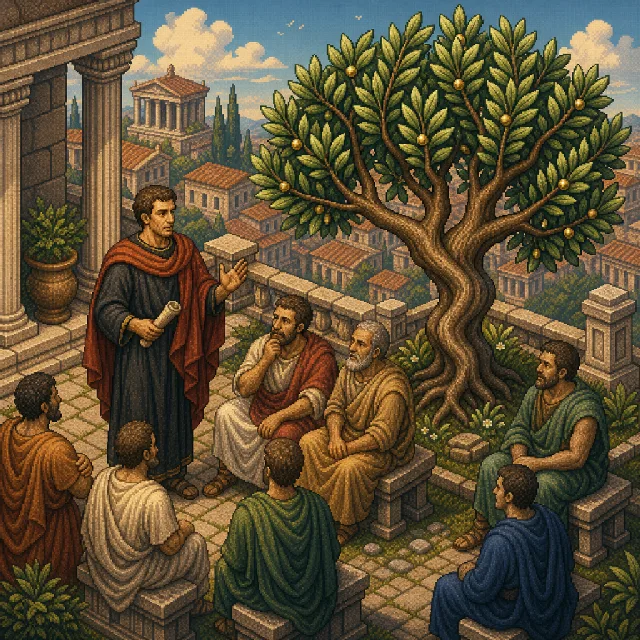
Discourses on Livy
Machiavelli on republics, liberty, conflict, and political founding.
About this book
In the Discourses on Livy, Machiavelli turns from princes to republics. Reading Roman history as a school of politics, he asks how free states are founded, preserved, corrupted, and renewed. The work is bolder and wider than The Prince: it treats conflict as a source of strength, laws as disciplined memory, and liberty as something citizens must repeatedly fight to keep.
How do you want to read?
- BOOK I1410 words
This chapter presents the table of contents for Book 1 of Machiavelli's Discourses on Livy, listing sixty chapter titles that preview the key themes of Roman political institutions and governance.
- BOOK II623 words
This chapter lists the topics for Book 2, setting the stage for Machiavelli's analysis of Rome's rise. The titles hint at debates over fortune versus valour and the methods of expansion, preparing the reader for detailed arguments ahead.
- BOOK III1456 words
This chapter gathers maxims from Machiavelli's Discourses on Livy, offering distilled wisdom on statecraft and war. Each aphorism stands alone, inviting reflection on power, renewal, and leadership.
- BOOK I679 words
Machiavelli sets out to revive the study of ancient political examples, lamenting that they are admired but not imitated. He blames a lack of true historical understanding and promises to remedy this by interpreting Livy's work.
- CHAPTER I.—_Of the Beginnings of Cities in general, and in particular1486 words
This chapter explores how a city's origin and site shape its destiny, examining whether founders should choose fertile or barren lands. Machiavelli argues that laws must compensate for nature's gifts, using Rome as a model of enduring virtue.
- CHAPTER II.—Of the various kinds of Government; and to which of them1895 words
This chapter examines the natural cycle of governments and argues that a mixed constitution—combining monarchy, aristocracy, and democracy—offers the greatest stability. Rome's evolution toward such a system, driven by internal conflict, serves as the key example.
- CHAPTER III.—Of the Accidents which led in Rome to the creation of455 words
As Rome's early unity fades with the Tarquins' fall, a new safeguard must arise. This chapter explores how necessity compels virtue and why institutions are born from conflict.
- CHAPTER IV.—That the Dissensions between the Senate and Commons of603 words
Machiavelli challenges a common criticism of ancient Rome, arguing that its internal conflicts were not signs of disorder but the very engine of its liberty and greatness.
- CHAPTER V.—_Whether the Guardianship of public Freedom is safer in the1068 words
As we explore the guardianship of liberty in republics, a key question arises: should this power rest with the nobles or the commons? Each choice carries its own risks and rewards, shaping the state's stability and freedom.
- CHAPTER VI.—_Whether it was possible in Rome to contrive such a1840 words
This chapter examines whether Rome could have avoided its internal conflicts while still achieving greatness. By comparing Rome to Sparta and Venice, Machiavelli explores the trade-offs between stability and expansion.
- CHAPTER VII.—_That to preserve Liberty in a State there must exist the1229 words
Chapter 11 explores the vital role of legal accusation in preserving public liberty. Through historical examples, Machiavelli argues that lawful channels for expressing discontent prevent chaos and foreign intervention.
- CHAPTER VIII.—_That Calumny is as hurtful in a Commonwealth as the1098 words
In this chapter, Machiavelli examines the destructive power of calumny in a republic. Through the story of Manlius Capitolinus, he contrasts secret slander with formal impeachment, setting the stage for a lesson on institutional remedies.
- CHAPTER IX.—_That to give new Institutions to a Commonwealth, or to1129 words
This chapter argues that to establish or reform a state's institutions, a single ruler with absolute authority is necessary. Using Romulus and Cleomenes as examples, it explores the tension between necessary violence and the common good.
- CHAPTER X.—_That in proportion as the Founder of a Kingdom or1313 words
Machiavelli sets up a stark contrast between those who build and those who destroy, urging princes to learn from history which path leads to lasting glory.
- CHAPTER XI.—_Of the Religion of the Romans._1148 words
This chapter explores how Numa Pompilius used religion to civilize Rome, contrasting his methods with Romulus's martial foundation. It examines the power of faith to bind citizens and sustain a state.
- CHAPTER XII.—That it is of much moment to make account of Religion; and1117 words
Machiavelli argues that preserving religion is key to a state's unity and virtue. He warns that corruption of religious rites leads to societal decay, using Rome as an example of how faith can be maintained for political strength.
- CHAPTER XIII.—_Of the use the Romans made of Religion in giving738 words
This chapter explores how the Romans skillfully used religion to achieve political and military goals, shaping their institutions and quelling unrest.
- CHAPTER XIV.—_That the Romans interpreted the Auspices to meet the737 words
Machiavelli explores how the Romans used auguries to inspire confidence in their armies, showing that religion was a tool for military success. He contrasts two commanders: one who managed the omens wisely, and another who acted rashly.
- CHAPTER XV.—_How the Samnites, as a last resource in their broken587 words
As the Samnites face their final stand, they turn to ancient rites to steel their soldiers. Machiavelli recounts how religious oaths can inspire courage, but also how they may falter against Roman discipline.
- CHAPTER XVI.—_That a People accustomed to live under a Prince, if by1324 words
Machiavelli examines the challenges a people face when they suddenly gain freedom after living under a prince, comparing them to a caged animal released into the wild. He warns of internal enemies and a lack of reliable allies.
- CHAPTER XVII.—_That a corrupt People obtaining Freedom can hardly925 words
This chapter examines whether a corrupted city can ever recover its freedom. Drawing on examples from Rome, Syracuse, and Milan, it contrasts early uncorrupted states with later decay.
- CHAPTER XVIII.—_How a Free Government existing in a corrupt City may be1432 words
Can a free government survive in a corrupt city? This chapter confronts that question, arguing that without good customs, laws lose their power. Reform becomes nearly impossible, forcing a hard choice between monarchy and collapse.
- CHAPTER XIX.—_After a strong Prince a weak Prince may maintain himself:719 words
This chapter examines how a kingdom can endure after a strong ruler, focusing on the importance of succession and the qualities of princes. Machiavelli uses Roman and biblical examples to illustrate his argument.
- CHAPTER XX.—_That the consecutive Reigns of two valiant Princes produce221 words
This chapter contrasts the perils of hereditary monarchy with the resilience of a commonwealth. Rome's shift to elected consuls avoided the risk of weak rulers, setting the stage for a broader argument about political succession.
- CHAPTER XXI.—_That it is a great reproach to a Prince or to a470 words
This chapter examines the foundation of military strength, arguing that a ruler's own citizens can become formidable soldiers under proper leadership. Machiavelli uses historical examples to challenge the notion that good soldiers are born only in certain lands.
- CHAPTER XXII.—_What is to be noted in the combat of the three Roman346 words
This chapter examines a classic Roman tale to extract three lasting political lessons. The story of the Horatii and Curiatii serves as a backdrop for principles about risk, justice, and the fragility of covenants.
- CHAPTER XXIII.—_That we should never hazard our whole Fortunes where we851 words
This chapter warns against overcommitting your forces to defend a narrow pass. Machiavelli argues that such tactics often backfire, as they risk your entire army on a position that cannot hold a large force.
- CHAPTER XXIV.—_That well-ordered States always provide Rewards and487 words
This chapter examines a key principle of statecraft through Roman examples: past merits should not excuse present crimes. The story of Horatius shows how even great service must not shield a citizen from punishment for wrongdoing.
- CHAPTER XXV.—_That he who would reform the Institutions of a free397 words
This chapter explores how a state can reform its government without alarming its people. Machiavelli argues that preserving the appearance of old institutions is key to gaining acceptance for new ones.
- CHAPTER XXVI.—_A new Prince in a City or Province of which he has taken341 words
This chapter explores the harsh realities a new prince faces when unable to rely on constitutional rule. It presents a controversial method for securing power through total institutional renewal, setting the stage for a moral reckoning.
- CHAPTER XXVII.—_That Men seldom know how to be wholly good or wholly431 words
Machiavelli recounts Pope Julius II's daring visit to Perugia, where he walked into enemy territory unarmed. This story sets the stage for a surprising reflection on human nature and the limits of both wickedness and virtue.
- CHAPTER XXVIII.—_Whence it came that the Romans were less ungrateful to517 words
This chapter contrasts Roman and Athenian responses to great citizens, exploring why Rome showed less ingratitude. Machiavelli examines historical causes, setting the stage for a deeper look at political suspicion.
- CHAPTER XXIX.—_Whether a People or a Prince is the more ungrateful._1231 words
Machiavelli turns to compare ingratitude in princes and peoples, tracing its roots to avarice or suspicion. He examines which is more prone to this vice, drawing on historical examples to illuminate the dynamics of power and reward.
- CHAPTER XXX.—_How Princes and Commonwealths may avoid the vice of609 words
In this chapter, Machiavelli explores the delicate balance between prince and captain. He offers stark advice on how to avoid the trap of ingratitude that follows success in war.
- CHAPTER XXXI.—_That the Roman Captains were never punished with extreme567 words
This chapter explores how the Romans balanced discipline with pragmatism in punishing their commanders. Their approach reveals a surprising leniency that aimed to preserve bold leadership.
- CHAPTER XXXII.—_That a Prince or Commonwealth should not delay389 words
This chapter examines a Roman strategy of granting benefits to the people only when danger looms. It warns against relying on such timing, setting up a cautionary analysis of why this approach often fails.
- CHAPTER XXXIII.—_When a Mischief has grown up in, or against a State,1013 words
In this chapter, Machiavelli examines how Rome and Florence handled growing threats, arguing that patience often outwits force. He warns against rash action when dangers first appear.
- CHAPTER XXXIV.—_That the authority of the Dictator did good and not997 words
Chapter 38 examines the Roman dictatorship, arguing that the office itself was not the cause of tyranny. Instead, it was the abuse of power by ambitious citizens that proved harmful. The chapter defends the dictatorship as a vital safeguard for the republic.
- CHAPTER XXXV—_Why the Creation of the Decemvirate in Rome, although573 words
Machiavelli now tackles a seeming contradiction: the freely chosen Decemvirs became tyrants. He distinguishes between the mode and term of authority, warning that unrestricted power granted for too long is always dangerous, regardless of how it is conferred.
- CHAPTER XXXVI.—_That Citizens who have held the higher Offices of a342 words
Machiavelli examines Rome's practice of allowing former high officials to serve in lower offices, contrasting it with modern republics like Venice. He argues this custom strengthened Rome's institutions.
- CHAPTER XXXVII.—_Of the Mischief bred in Rome by the Agrarian Law: and1313 words
In this chapter, Machiavelli examines the Roman Agrarian Laws to illustrate how laws with retrospective effect can ignite conflict. He traces the struggle between commons and nobles, showing how ambition and greed fuel political disorder.
- CHAPTER XXXVIII.—_That weak Republics are irresolute and undecided; and1148 words
In this chapter, Machiavelli examines how wise republics navigate crises through decisive action, contrasting the Roman senate's prudence with the fatal indecision of weaker states. The analysis unfolds through historical examples that reveal the costs of hesitation.
- CHAPTER XXXIX.—_That often the same Accidents are seen to befall714 words
This chapter examines how people often mistake the cause of their troubles, blaming institutions rather than underlying conditions. Through historical examples, it shows the danger of such misjudgments.
- CHAPTER XL.—_Of the creation of the Decemvirate in Rome, and what1949 words
This chapter examines the rise and fall of Rome's decemvirate, revealing how both the senate and the people made critical errors that led to tyranny. The actions of Appius Claudius, the chief decemvir, offer a cautionary tale about the misuse of power.
- CHAPTER XLI.—_That it is unwise to pass at a bound from leniency to256 words
Machiavelli examines a pivotal misstep in Appius's bid for power, where a sudden shift in character backfired. The lesson lies not in the change itself, but in its timing and execution.
- CHAPTER XLII.—_How easily Men become corrupted._187 words
This chapter examines the corruption of the decemvirate, revealing how easily even good men can change. It offers a cautionary observation about human nature and the need for legal restraints.
- CHAPTER XLIII.—_That Men fighting in their own Cause make good and309 words
This chapter examines the crucial role of personal investment in military effectiveness. Machiavelli contrasts armies fighting for their own cause with those serving under oppressive rulers.
- CHAPTER XLIV.—_That the Multitude is helpless without a Head: and that414 words
In this chapter, Machiavelli examines a Roman episode to illustrate a strategic mistake. The people's demand for the decemvirs' execution threatens to undermine their own cause, revealing a timeless lesson about negotiation.
- CHAPTER XLV.—_That it is of evil example, especially in the Maker of a706 words
This chapter examines the dangers of breaking one's own laws and the harm of repeated punishments. Through Roman and Florentine examples, it shows how inconsistency and relentless attacks can destabilize a state.
- CHAPTER XLVI.—_That Men climb from one step of Ambition to another,630 words
In this chapter, Machiavelli examines how the desire to avoid injury can lead men to inflict harm on others, using Roman history to illustrate the cycle of ambition and oppression.
- CHAPTER XLVII.—_That though Men deceive themselves in Generalities, in1179 words
This chapter explores how people often judge wisely in specific cases but err in broad generalizations. Through historical examples, we see how the same populace can be both deceived by abstractions and discerning when faced with concrete choices.
- CHAPTER XLVIII.—_He who would not have an Office bestowed on some176 words
In this chapter, Machiavelli examines how the Roman senate manipulated elections for tribunes with consular powers. He contrasts two tactics: promoting distinguished candidates or bribing base ones. The outcome reveals a recurring pattern in popular decision-making.
- CHAPTER XLIX.—_That if Cities which, like Rome, had their beginning in775 words
This chapter examines why cities born in freedom still struggle to craft lasting laws for liberty, while those founded in subjection face nearly insurmountable obstacles. Machiavelli turns to Rome and Florence to illustrate the point.
- CHAPTER L.—_That neither any Council nor any Magistrate should have489 words
When rival consuls grind Rome's business to a halt, the senate turns to the tribunes. This chapter explores how checks on power prevent paralysis, using a Roman conflict and a Venetian example to illustrate a timeless lesson about institutional design.
- CHAPTER LI.—_What a Prince or Republic does of Necessity, should seem282 words
In this chapter, we explore how wise leaders can turn necessary actions into opportunities for goodwill. The Roman senate's decision on military pay provides a timeless example of prudence in action.
- CHAPTER LII.—_That to check the arrogance of a Citizen who is growing779 words
This chapter explores a subtle strategy for curbing the ambition of powerful citizens: not opposing them directly, but anticipating their methods of gaining influence.
- CHAPTER LIII.—_That the People, deceived by a false show of Advantage,1297 words
In this chapter, Machiavelli explores how the allure of bold promises can lead a people toward ruin. He examines why citizens are so easily persuaded by proposals that seem spirited or advantageous, even when hidden dangers threaten the state.
- CHAPTER LIV.—_Of the boundless Authority which a great Man may use to410 words
This chapter explores how a respected leader can calm a restless crowd. Through ancient poetry and a Florentine story, Machiavelli shows the power of dignified authority in moments of crisis.
- CHAPTER LV.—_That Government is easily carried on in a City wherein the1722 words
Machiavelli explores the conditions that make a republic or a princedom possible, focusing on the role of equality and the presence of 'gentlemen.' Through examples from Rome, Germany, and Italy, he examines how virtue and corruption shape political institutions.
- CHAPTER LVI.—_That when great Calamities are about to befall a City or374 words
Signs in the sky or voices in the night have long been thought to herald great calamities. This chapter explores historical examples of such portents, from Savonarola's prophecies to Livy's account of a warning before the Gauls' invasion.
- CHAPTER LVII.—_That the People are strong collectively, but447 words
When a crowd acts boldly together, each individual may still fear alone. This chapter explores how collective strength dissolves into private caution, and why some grievances cut deeper than others.
- CHAPTER LVIII.—_That a People is wiser and more constant than a Prince_1972 words
Machiavelli challenges the common view that the multitude is fickle, arguing that such faults apply equally to princes. He prepares to defend the people's prudence and stability when restrained by laws.
- CHAPTER LIX.—_To what Leagues or Alliances we may most trust; whether763 words
This chapter examines whether commonwealths or princes are more reliable in keeping faith. Machiavelli weighs their behavior under duress and in pursuit of advantage, drawing on historical examples to compare their tendencies.
- CHAPTER LX.—_That the Consulship and all the other Magistracies in Rome417 words
This chapter examines the logical consequence of a city that disregards birth in granting high offices. It argues that such a city must also ignore age to fully benefit from exceptional young talent.
- BOOK II1329 words
Machiavelli explores why people often praise the past and criticize the present, examining the causes of this tendency. He prepares to defend his own admiration for ancient Rome against modern corruption.
- CHAPTER I.—_Whether the Empire acquired by the Romans was more due to1360 words
Machiavelli challenges the common belief that Rome's empire was due more to fortune than to valour. He argues that their institutions and military prudence were the true architects of their success.
- CHAPTER II.—_With what Nations the Romans had to contend, and how2213 words
This chapter explores the fierce love of liberty that drove ancient republics to greatness, contrasting it with modern servitude and the misinterpretation of Christian religion that has weakened the world.
- CHAPTER III.—_That Rome became great by destroying the Cities which lay629 words
This chapter explores how Rome's policy of expanding its population through welcoming strangers and transplanting conquered peoples fueled its rise to power, contrasting with Sparta's restrictive approach.
- CHAPTER IV.—_That Commonwealths have followed three Methods for1557 words
Machiavelli examines three methods of territorial expansion for republics, comparing the Roman approach with those of the Etruscans and others. He argues that one method stands out as superior, setting the stage for a detailed analysis.
- CHAPTER V.—_That changes in Sects and Tongues, and the happening of726 words
Machiavelli explores why the past fades from memory, attributing it to human actions like religious change and natural disasters. He argues that oblivion is not random but follows patterns that reshape civilization.
- CHAPTER VI.—_Of the Methods followed by the Romans in making War_766 words
This chapter explores the Roman approach to warfare, focusing on efficiency and enrichment. Their methods of waging short, decisive wars and planting colonies offer key insights into their rise.
- CHAPTER VII.—_Of the Quantity of Land assigned by the Romans to each280 words
Machiavelli explores Roman colonization, focusing on land allotment practices. He argues that small plots were given to maximize settlers and ensure self-sufficiency through careful cultivation and shared resources.
- CHAPTER VIII.—_Why certain Nations leave their ancestral Seats and1406 words
This chapter explores two distinct kinds of war: one for dominion and another for survival. Machiavelli contrasts conquests that leave inhabitants in place with desperate migrations that seek to replace entire populations.
- CHAPTER IX.—_Of the Causes which commonly give rise to Wars between560 words
This chapter examines how powerful states often find themselves drawn into war through the protection of weaker allies, using Roman history as a key example.
- CHAPTER X.—_That contrary to the vulgar opinion, Money is not the1262 words
Machiavelli challenges a common belief about the resources needed for war. He argues that princes often misjudge their strength by relying on wealth rather than a dependable army.
- CHAPTER XI.—_That it were unwise to ally yourself a Prince who has402 words
This chapter examines the pitfalls of relying on alliances with distant or weak princes, using Livy's history and contemporary examples to reveal how such ties often provide reputation rather than real aid.
- CHAPTER XII.—_Whether when Invasion is imminent it is better to1444 words
This chapter weighs whether a prince should await an enemy at home or invade his territory, examining arguments and historical examples for both strategies.
- CHAPTER XIII.—_That Men rise from humble to high Fortunes rather by746 words
This chapter explores how fraud, not force, often lifts the lowly to greatness, using historical examples to argue that deception is a necessary tool for ambitious princes and republics alike.
- CHAPTER XIV.—_That Men often err in thinking they can subdue Pride by533 words
This chapter challenges the virtue of humility in statecraft, arguing it can embolden enemies. Through Roman history, it shows how forbearance may invite aggression rather than peace.
- CHAPTER XV.—That weak States are always dubious in their Resolves; and1040 words
Delays in decision-making can prove costly, as this chapter illustrates through historical examples. The text argues that uncertainty and tardy resolves often lead to harm, urging clarity and promptness in deliberation.
- CHAPTER XVI.—_That the Soldiers of our days depart widely from the1551 words
Machiavelli examines a pivotal Roman battle and the formation that gave them a decisive edge. He contrasts their layered tactics with modern armies, setting up a critique of contemporary military practice.
- CHAPTER XVII.—_What importance the Armies of the present day should1251 words
Machiavelli turns to a common objection: would Roman conquests have been hindered by artillery? He weighs the weapon's effect on attackers versus defenders, challenging modern assumptions about its power.
- CHAPTER XVIII.—_That the authority of the Romans and the example of1563 words
This chapter explores the enduring debate between infantry and cavalry, drawing on Roman history and later examples to argue for the primacy of foot soldiers.
- CHAPTER XIX.—_That Acquisitions made by ill-governed States and such as1576 words
Machiavelli warns that modern states ignore Roman methods at their peril. He contrasts true aggrandizement through disciplined infantry and public wealth with false paths that lead to ruin.
- CHAPTER XX.—_Of the Dangers incurred by Princes or Republics who resort770 words
This chapter examines the dangers of relying on auxiliary troops for defense, using historical examples to illustrate their unreliability.
- CHAPTER XXI.—_That Capua was the first City to which the Romans sent a736 words
As we explore how Rome governed conquered cities, Machiavelli contrasts distant rule with direct control. The chapter examines why subjects often prefer unseen authority, setting up a lesson for modern states.
- CHAPTER XXII.—_That in matters of moment Men often judge amiss._984 words
Machiavelli observes how easily men are deceived by appearances, especially in times of peace. He warns that false hopes often lead to disastrous decisions, as shown by historical examples.
- CHAPTER XXIII.—_That in chastising their Subjects when circumstances1615 words
Machiavelli argues that rulers must avoid half-measures when dealing with conquered subjects. He examines Roman decisions to illustrate that either total destruction or generous benevolence secures lasting peace.
- CHAPTER XXIV.—_That, commonly, Fortresses do much more Harm than Good_2978 words
Machiavelli challenges the common belief that fortresses secure a ruler's power, arguing they often do more harm than good. He contrasts Roman wisdom with modern practices to question whether these strongholds truly protect or instead invite ruin.
- CHAPTER XXV.—_That he who attacks a City divided against itself, must637 words
This chapter explores a common political miscalculation: attacking a state while it is divided. History shows such aggression often backfires, uniting the factions against the invader.
- CHAPTER XXVI.—_That Taunts and Abuse breed Hatred against him who uses670 words
This chapter explores the dangers of insults and abusive language in conflict, showing how such words can backfire and provoke greater harm. Through historical examples, it illustrates why wise leaders restrain their soldiers from verbal attacks.
- CHAPTER XXVII.—_That prudent Princes and Republics should be content to996 words
Victory can breed false confidence, leading even the wisest to overreach. This chapter examines how pride and misplaced hope have undone nations that refused reasonable terms.
- CHAPTER XXVIII.—_That to neglect the redress of Grievances, whether662 words
This chapter examines how neglecting justice can lead to ruin, using Rome's conflict with the Gauls as a stark example of the consequences when envoys overstep their bounds.
- CHAPTER XXIX.—_That Fortune obscures the minds of Men when she would992 words
Fortune's hand can blind even the wisest, as Rome's fall to the Gauls shows. Yet within disaster, seeds of recovery are sown.
- CHAPTER XXX.—_That really powerful Princes and, Commonwealths do not1324 words
This chapter examines how a state's true strength is measured not by wealth but by its own military power. Machiavelli contrasts Rome's reliance on valor with the weakness of states that buy alliances, setting the stage for a lesson on enduring power.
- CHAPTER XXXI.—_Of the Danger of trusting banished Men._529 words
This chapter explores the dangers rulers face when trusting exiles. Through historical examples, Machiavelli warns that exiles' promises are often empty and self-serving, leading to ruin for those who rely on them.
- CHAPTER XXXII.—_In how many Ways the Romans gained Possession of1223 words
The Romans favored open battle over sieges, but when towns had to be taken, they used assault, stratagem, or surrender. Each method had its own risks and rewards, as this chapter explores.
- CHAPTER XXXIII.—_That the Romans intrusted the Captains of their Armies546 words
Machiavelli examines the Roman practice of granting consuls full authority in war, contrasting it with the cautious methods of modern republics. This chapter explores the wisdom of trusting commanders on the spot.
- CHAPTER I.—_For a Sect or Commonwealth to last long, it must often be1759 words
This chapter explores how states and sects endure by returning to their founding principles. Through examples from Rome and the Church, it examines renewal through institutions, virtuous individuals, or external shocks.
- CHAPTER II.—_That on occasion it is wise to feign Folly._584 words
This chapter explores the cunning of Junius Brutus, who feigned folly to overthrow tyranny. It advises the discontented to measure their strength and choose between open war or feigned loyalty.
- CHAPTER III.—_That to preserve a newly acquired Freedom we must slay516 words
This chapter examines the harsh necessity of punishing enemies after a change in government, using Brutus's severity and Soderini's failed leniency as contrasting examples.
- CHAPTER IV.—_That an Usurper is never safe in his Princedom while those433 words
This chapter examines the dangers of leaving deposed rulers alive, drawing on Roman history. Machiavelli argues that old injuries cannot be healed by later benefits, a lesson for any prince.
- CHAPTER V.—_How an Hereditary King may come to lose his Kingdom._608 words
In this chapter, Machiavelli examines Tarquin the Proud's fall, arguing it stemmed from his tyranny rather than his son's crime. He warns princes that violating laws weakens their authority.
- CHAPTER VI.—_Of Conspiracies._, part 14506 words
Conspiracies bring great danger to both princes and private citizens, as many more rulers have lost their lives through plots than open war. This chapter examines their causes, perils, and rare successes.
- CHAPTER VI.—_Of Conspiracies._, part 24345 words
Machiavelli now turns to the dangers that follow a conspiracy's execution, examining how surviving heirs or popular affection can undo the plotters' work.
- CHAPTER VII.—_Why it is that changes from Freedom to Servitude, and333 words
This chapter explores why some political transitions are bloody while others are peaceful. The key lies in the government's origin—whether it was born from violence or from the community's authority.
- CHAPTER VIII.—_That he who would effect Changes in a Commonwealth, must1159 words
Machiavelli examines how a state's condition determines the impact of ambitious citizens. Through Roman examples, he shows that in uncorrupted republics, even capable troublemakers fail. The chapter sets up a key lesson about adapting actions to the times.
- CHAPTER IX.—_That to enjoy constant good Fortune we must change with761 words
This chapter explores how fortune favors those whose actions align with the times. Machiavelli contrasts the adaptability of republics with the rigidity of princes, using historical examples to illustrate his argument.
- CHAPTER X.—_That a Captain cannot escape Battle when his Enemy forces1588 words
This chapter examines a common but costly mistake in warfare: the refusal to give battle. Through historical examples, it challenges the notion that avoiding engagement is always prudent.
- CHAPTER XI.—_That one who has to contend with many, though he be weaker863 words
This chapter explores how a single powerful figure can overcome a coalition of many opponents by dividing them. Machiavelli illustrates this with ancient Roman politics and modern Italian wars, setting the stage for a strategic lesson in power dynamics.
- CHAPTER XII.—_A prudent Captain will do what he can to make it1300 words
This chapter explores how necessity drives soldiers to fight fiercely and how skilled captains can wield it to their advantage.
- CHAPTER XIII.—_Whether we may trust more to a valiant Captain with a646 words
This chapter weighs the age-old question of whether a strong army or a skilled captain matters more in war. Machiavelli examines both sides through Roman history, setting the stage for a balanced conclusion.
- CHAPTER XIV.—_Of the effect produced in Battle by strange and1025 words
This chapter explores how unexpected sights or sounds can turn the tide of battle. Through historical examples, it examines the importance of discipline and the art of surprise in military command.
- CHAPTER XV.—_That one and not many should head an Army: and why it is581 words
This chapter examines the perils of divided command in war, drawing on ancient and modern examples to illustrate how multiple leaders can lead to confusion and failure.
- CHAPTER XVI.—_That in Times of Difficulty true Worth is sought after;965 words
In this chapter, Machiavelli examines how republics often neglect their most capable citizens during peacetime, a dynamic that can breed resentment and instability. He explores this through historical examples and proposes remedies to prevent such harm.
- CHAPTER XVII.—_That we are not to offend a Man, and then send him to423 words
This chapter examines a cautionary tale from Roman history, exploring how personal grievances can influence a leader's decisions and the risks a republic faces when appointing such a citizen to high command.
- CHAPTER XVIII.—_That it is the highest Quality of a Captain to be able1032 words
In this chapter, Machiavelli explores how a commander's ability to detect the enemy's true condition, especially when both sides are in distress, can decide the outcome of a conflict.
- CHAPTER XIX.—_Whether Indulgence or Severity be more necessary for523 words
Machiavelli examines two contrasting Roman commanders to explore whether severity or humanity is more effective in governing. He then introduces a quote from Tacitus that seems to contradict the example, setting up a nuanced resolution.
- CHAPTER XX.—_How one humane act availed more with the men of Falerii,439 words
This chapter examines a story of Roman virtue that turned a siege into a surrender. It explores the power of humanity over force, and how one act of integrity can achieve what armies cannot.
- CHAPTER XXI.—_How it happened that Hannibal pursuing a course contrary894 words
This chapter explores a puzzle: how opposite methods—Scipio's humanity and Hannibal's cruelty—can achieve similar success. Machiavelli examines the role of transcendent valour in bridging this paradox.
- Chapter XXII.—_That the severity of Manlius Torquatus and the1813 words
Machiavelli compares Manlius Torquatus and Valerius Corvinus, two Roman captains who achieved equal success through opposite methods—severity versus gentleness. He explores why each approach worked and which is better for a republic versus a prince.
- CHAPTER XXIII.—_Why Camillus was banished from Rome._439 words
This chapter examines how a leader's sternness and pride can breed hatred, even when his virtues earn admiration. Through the example of Camillus, we see the delicate balance between discipline and popularity.
- CHAPTER XXIV.—_That prolonged Commands brought Rome to Servitude_470 words
This chapter examines two causes of Rome's decline: agrarian disputes and extended military commands. Machiavelli argues that prolonging commands gave commanders undue influence over soldiers, ultimately undermining the republic.
- CHAPTER XXV.—_Of the poverty of Cincinnatus and of many other Roman744 words
In this chapter, we explore how Rome's embrace of poverty shaped its greatness. Through the stories of Cincinnatus and others, we see how merit, not wealth, was the path to honor.
- CHAPTER XXVI.—_How Women are a cause of the ruin of States._436 words
In this chapter, we examine a conflict in Ardea over an heiress's marriage, which escalates into civil strife and foreign intervention. The events illustrate how personal disputes can unravel a city's stability.
- CHAPTER XXVII.—_How a divided City may be reunited, and how it is a1018 words
This chapter challenges the common belief that dividing subject cities makes them easier to control. Through historical examples and logical argument, it examines the true consequences of such policies.
- CHAPTER XXVIII.—_That a Republic must keep an eye on what its Citizens562 words
This chapter examines how acts of generosity can conceal seeds of tyranny, using the story of Spurius Melius as a cautionary example. It urges careful scrutiny of private favors that may undermine public liberty.
- CHAPTER XXIX.—_That the Faults of a People are due to its Prince._520 words
This chapter examines how a ruler's character shapes his people's behavior, arguing that subjects mirror their prince's virtues or vices. Through historical examples, it explores the principle that leaders cannot blame their people for faults they themselves embody or tolerate.
- CHAPTER XXX.—_That a Citizen who seeks by his personal influence to1261 words
As the Roman senate faces a coalition of enemies, they turn to Camillus, a leader whose past service has earned trust. This chapter examines how a city can prepare for war and how a leader can overcome envy to serve the state.
- CHAPTER XXXI.—_That strong Republics and valiant Men preserve through1290 words
What distinguishes a great man from a weak one is constancy through fortune's changes. Rome's steadfastness contrasts with Venice's collapse after a single defeat. This chapter explores how training and character shape a republic's resilience.
- CHAPTER XXXII.—_Of the methods which some have used to make Peace430 words
In this chapter, Machiavelli explores a ruthless strategy for preventing reconciliation between warring parties. He argues that by inciting one side to commit grave wrongs, you can ensure lasting enmity.
- CHAPTER XXXIII.—_That to insure victory in battle you must inspire your848 words
What makes an army believe it will win? This chapter explores the foundations of battlefield confidence, from discipline and trust in leadership to the subtle power of religious rites—and warns that without genuine valor, no amount of ceremony can secure victory.
- CHAPTER XXXIV.—_By what reports, rumours, or surmises the Citizens of a1429 words
How do citizens earn the trust of a republic? This chapter explores the ways a people judges character when awarding honors, comparing their discernment to that of a prince.
- CHAPTER XXXV.—_Of the Danger incurred in being the first to recommend905 words
How do you advise when the outcome is uncertain? This chapter explores the risks of promoting new measures and the delicate balance between duty and self-preservation.
- CHAPTER XXXVI.—_Why it has been and still may be affirmed of the Gauls,792 words
In this chapter, Machiavelli explores the nature of Gaulish bravery and contrasts it with Roman discipline. He classifies armies into three types, setting the stage for a deeper analysis of what makes an army truly effective.
- CHAPTER XXXVII.—_Whether a general engagement should be preceded by1187 words
Machiavelli explores the delicate balance between preparing troops for a new enemy and the risk of discouraging them through skirmishes. He advises caution, drawing on historical examples to illustrate the dangers and benefits of such preliminary engagements.
- CHAPTER XXXVIII.—_Of the Qualities of a Captain in whom his Soldiers562 words
In this chapter, Machiavelli explores what makes a captain worthy of his soldiers' trust. Through the example of Valerius Corvinus, he contrasts leaders who rely on words alone with those who lead by deed.
- CHAPTER XXXIX.—_That a Captain should have good knowledge of Places._811 words
This chapter explores why a commander must know the lay of the land, and how hunting sharpens that skill. Through ancient examples, Machiavelli shows that terrain knowledge is not just useful—it can decide a battle before it begins.
- CHAPTER XL.—_That Fraud is fair in War._402 words
Machiavelli turns to a controversial topic: fraud in war. He argues that deception against an enemy is praiseworthy, but carefully distinguishes it from breaking one's word. Historical examples illustrate his point, setting the stage for a nuanced discussion.
- CHAPTER XLI.—_That our Country is to be defended by Honour or by404 words
In this chapter, Machiavelli examines a moment of Roman surrender to the Samnites, where the army faced utter humiliation. He uses this historical event to explore a controversial principle about national survival.
- CHAPTER XLII.—_That Promises made on Compulsion are not to be447 words
After the disgrace of the Caudine surrender, the consuls return to Rome. Spurius Posthumius argues before the senate that the peace should be repudiated, offering himself as a hostage. His bold stance sets the stage for a lesson on honor and necessity.
- CHAPTER XLIII.—_That Men born in the same Province retain through all684 words
History often mirrors itself, shaped by unchanging human nature. This chapter examines how past betrayals can illuminate present dangers, using Florence's experience with foreign powers as a cautionary tale.
- CHAPTER XLIV.—_That where ordinary methods fail, Hardihood and Daring695 words
This chapter examines a strategic principle of timing in negotiations, illustrated through historical examples. It shows how forcing a quick decision can overcome resistance.
- CHAPTER XLV.—_Whether in battle it is better to await and repel the251 words
In this chapter, Machiavelli compares two Roman consuls' battle tactics. Decius attacks with full force, while Fabius reserves his troops. The outcome reveals which strategy proves more effective.
- CHAPTER XLVI.—_How the Characteristics of Families come to be348 words
In this chapter, Machiavelli examines why families within a city often exhibit distinct characters. He argues that upbringing, not blood, shapes these traits, using Roman examples to illustrate his point.
- CHAPTER XLVII.—_That love of his Country should lead a good Citizen to189 words
In this chapter, a consul's injury threatens Rome's army. The Senate must appoint a dictator, but only his enemy can do it. Will personal hatred prevail over public duty?
- CHAPTER XLVIII.—_That on finding an Enemy make what seems a grave482 words
This chapter examines a timeless military principle: never trust an enemy's apparent blunder. Through historical examples, it reveals how eagerness for victory can blind leaders to hidden traps.
- CHAPTER XLIX.—_That a Commonwealth to preserve its Freedom has constant653 words
When a city grows large, disorders inevitably arise, testing its laws and leadership. Rome faced such crises with poisonings and secret conspiracies, requiring punishments that could restore order without destroying the state.
- BOOK I1410 words
- BOOK I200 words
This chapter presents the table of contents for Book 1 of Machiavelli's Discourses on Livy, outlining the topics to be explored. The preface and sixty chapter titles set the stage for a deep dive into Roman political institutions and their lessons.
- BOOK II119 words
This chapter outlines the key themes of Book 2, focusing on Rome's rise through military skill and strategic expansion. It sets the stage for exploring how valour, not fortune, shaped an empire.
- BOOK III378 words
This chapter distills Machiavelli's insights on statecraft and military command into a series of maxims. Each principle reflects hard-won lessons from history, urging leaders to adapt, act decisively, and renew their foundations.
- BOOK I137 words
Machiavelli observes a puzzling contradiction: while antiquity is revered in art and law, its political examples are ignored. He sets out to correct this by interpreting Livy's history.
- CHAPTER I.—_Of the Beginnings of Cities in general, and in particular206 words
Machiavelli examines how a city's origin and site shape its character. He argues that fertile lands require strict laws to prevent corruption, setting the stage for Rome's enduring virtue.
- CHAPTER II.—Of the various kinds of Government; and to which of them375 words
This chapter explores how governments form and decay, and why a mixed constitution endures. Rome’s path to such a system, born from conflict, offers a striking contrast to the work of a single legislator.
- CHAPTER III.—Of the Accidents which led in Rome to the creation of140 words
This chapter explores a foundational Stoic principle: the necessity of institutional safeguards against human nature. It examines how Rome's tribunes arose from the need to curb noble arrogance and protect the common good.
- CHAPTER IV.—That the Dissensions between the Senate and Commons of159 words
In this chapter, Machiavelli challenges the common view that Rome's internal conflicts were destructive. Instead, he argues they were essential to its freedom and greatness.
- CHAPTER V.—_Whether the Guardianship of public Freedom is safer in the1064 words
This chapter weighs the risks of entrusting liberty's guardianship to nobles or commons, comparing Spartan and Roman outcomes. It examines which class—those seeking power or those preserving it—poses greater danger to a republic.
- CHAPTER VI.—_Whether it was possible in Rome to contrive such a286 words
Can a republic achieve greatness without internal conflict? Machiavelli examines Rome's tumults and contrasts them with stable Sparta and Venice to explore this question.
- CHAPTER VII.—_That to preserve Liberty in a State there must exist the244 words
This chapter explores the power of public accusation as a safeguard for liberty, examining its benefits and risks through historical examples.
- CHAPTER VIII.—_That Calumny is as hurtful in a Commonwealth as the179 words
This chapter explores the destructive power of calumny in free states and the remedy of legal impeachment. Through Roman and Florentine examples, we see how unchecked slander can undermine trust and lead to ruin.
- CHAPTER IX.—_That to give new Institutions to a Commonwealth, or to205 words
This chapter argues that foundational change requires a single, decisive leader. It explores the necessity of absolute authority in establishing new institutions, while cautioning against its inheritance.
- CHAPTER X.—_That in proportion as the Founder of a Kingdom or177 words
This chapter contrasts the paths of glory and infamy for princes, urging a choice between restoration and destruction. Machiavelli uses historical examples to illuminate the consequences of each path.
- CHAPTER XI.—_Of the Religion of the Romans._243 words
Chapter 15 explores the role of religion in founding a state, using Rome's early history as a case study. Numa Pompilius, successor to Romulus, is credited with instilling religious fear that shaped Roman virtue.
- CHAPTER XII.—That it is of much moment to make account of Religion; and193 words
This chapter examines how religion shapes political unity and virtue. Machiavelli argues that maintaining religious rites is vital for a state's health, using Rome as a model of wise leadership.
- CHAPTER XIII.—_Of the use the Romans made of Religion in giving185 words
This chapter explores how the Romans used religion to guide political and military actions, shaping outcomes through fear and hope.
- CHAPTER XIV.—_That the Romans interpreted the Auspices to meet the173 words
Machiavelli explores how Roman commanders used religious auguries to instill confidence in their armies, showing that the prudent handling of omens could determine victory or defeat.
- CHAPTER XV.—_How the Samnites, as a last resource in their broken129 words
Religion can be a powerful tool to inspire courage, but its limits become clear when facing disciplined skill. This chapter examines a historical example where faith met force.
- CHAPTER XVI.—_That a People accustomed to live under a Prince, if by231 words
Machiavelli warns that a newly freed people face hidden dangers from those who thrived under tyranny. Without eliminating these enemies, freedom is fragile and easily lost.
- CHAPTER XVII.—_That a corrupt People obtaining Freedom can hardly202 words
This chapter examines why some cities can regain freedom after tyranny while others cannot. It contrasts Rome's early success with later failures, and draws lessons from Syracuse, Naples, and Thebes.
- CHAPTER XVIII.—_How a Free Government existing in a corrupt City may be210 words
Chapter 22 confronts a grim reality: in a corrupt city, freedom falters. Laws need good customs to work, and institutions resist change. The path to reform is treacherous, demanding either a rare sage or a violent prince.
- CHAPTER XIX.—_After a strong Prince a weak Prince may maintain himself:155 words
Machiavelli examines how a kingdom fares under weak rulers after a strong one, using historical examples to illustrate the risks of consecutive feeble princes.
- CHAPTER XX.—_That the consecutive Reigns of two valiant Princes produce75 words
This chapter examines how Rome's system of elective consuls created a steady line of capable leaders. It contrasts this with hereditary monarchy, setting the stage for a key insight about commonwealths.
- CHAPTER XXI.—_That it is a great reproach to a Prince or to a147 words
Machiavelli argues that a state's military strength depends not on its people or climate, but on the ruler's ability to train and discipline its own citizens.
- CHAPTER XXII.—_What is to be noted in the combat of the three Roman105 words
In this chapter, we examine a Roman legend that distills three strategic principles. The tale of the Horatii and Curiatii offers warnings about risk, justice, and covenants.
- CHAPTER XXIII.—_That we should never hazard our whole Fortunes where we186 words
This chapter examines the strategic wisdom of not committing all resources to defend a single position. It warns that over-focusing on a pass can lead to greater losses.
- CHAPTER XXIV.—_That well-ordered States always provide Rewards and142 words
This chapter examines whether a state should weigh citizens' past merits against their current misdeeds. Through Roman examples, it explores the consequences of keeping rewards and punishments separate.
- CHAPTER XXV.—_That he who would reform the Institutions of a free109 words
This chapter explores the art of reform through preserving old forms. It suggests that change is more palatable when it wears the cloak of tradition.
- CHAPTER XXVI.—_A new Prince in a City or Province of which he has taken115 words
This chapter examines the harsh measures a new prince may need to take when constitutional rule is impossible. Machiavelli argues that complete renewal of institutions, while cruel, is sometimes the only path to secure power.
- CHAPTER XXVII.—_That Men seldom know how to be wholly good or wholly107 words
Machiavelli presents a striking historical example to explore the limits of human ambition. Can men rise to greatness in evil as well as good?
- CHAPTER XXVIII.—_Whence it came that the Romans were less ungrateful to138 words
Machiavelli contrasts Roman and Athenian ingratitude toward great citizens, exploring whether this stems from national character or circumstance. The chapter examines historical examples to uncover the root cause.
- CHAPTER XXIX.—_Whether a People or a Prince is the more ungrateful._240 words
Ingratitude stems from avarice or suspicion. Machiavelli compares how princes and peoples handle these motives, weighing which is more prone to this vice.
- CHAPTER XXX.—_How Princes and Commonwealths may avoid the vice of148 words
This chapter explores how a prince or republic can avoid ingratitude toward military commanders. Machiavelli contrasts the paths available to a prince who leads personally with those for a captain serving under another's authority.
- CHAPTER XXXI.—_That the Roman Captains were never punished with extreme103 words
How should a state punish its commanders after defeat? The Romans had a surprising answer: lightly. Their approach reveals a deep understanding of human nature and the burdens of leadership.
- CHAPTER XXXII.—_That a Prince or Commonwealth should not delay132 words
When does generosity become a tool of survival? This chapter examines the risky strategy of granting benefits only in times of crisis, using ancient Rome as a cautionary example.
- CHAPTER XXXIII.—_When a Mischief has grown up in, or against a State,254 words
When a disorder grows within a republic, Machiavelli advises caution over force. He draws on Roman and Florentine history to show how hasty action can backfire, while patience may allow problems to dissolve on their own.
- CHAPTER XXXIV.—_That the authority of the Dictator did good and not193 words
This chapter examines the Roman dictatorship, arguing that it was not the office itself but its usurpation that harmed the republic. The author defends its constitutional use as a safeguard.
- CHAPTER XXXV—_Why the Creation of the Decemvirate in Rome, although127 words
Machiavelli warns that authority granted by popular vote can become dangerous when it is unrestricted and long-lasting. He uses Rome's Decemvirs to illustrate how unchecked power corrupts, even in an uncorrupted people.
- CHAPTER XXXVI.—_That Citizens who have held the higher Offices of a112 words
Machiavelli turns to the practical question of how a republic should treat its former high officials. He argues that allowing them to serve in lower offices, as Rome did, strengthens the state. This chapter examines the wisdom behind that policy.
- CHAPTER XXXVII.—_Of the Mischief bred in Rome by the Agrarian Law: and200 words
In this chapter, Machiavelli examines how laws that retroactively challenge ancient customs can ignite conflict. He uses Rome's Agrarian Laws to illustrate the dangers of such measures, setting the stage for a cautionary tale about ambition and disorder.
- CHAPTER XXXVIII.—_That weak Republics are irresolute and undecided; and246 words
When necessity presses, even the wise must choose between lesser evils. This chapter examines how Rome's senate turned a crisis into an opportunity, while weaker states stumbled into disgrace.
- CHAPTER XXXIX.—_That often the same Accidents are seen to befall140 words
This chapter examines how historical patterns repeat, revealing the constancy of human passions. By comparing Florence and Rome, we see how people often blame institutions before realizing their necessity.
- CHAPTER XL.—_Of the creation of the Decemvirate in Rome, and what308 words
As we turn to Rome's decemvirate, we see how the pursuit of liberty and power can lead to tyranny. The events unfold with lessons in political miscalculation.
- CHAPTER XLI.—_That it is unwise to pass at a bound from leniency to86 words
This chapter examines the strategic pitfalls of a sudden change in character. Machiavelli warns against abrupt shifts from virtue to vice, using historical examples to illustrate the consequences.
- CHAPTER XLII.—_How easily Men become corrupted._74 words
This chapter examines the corrupting influence of power and the necessity of laws to curb human appetites. It warns that without restraint, even the best institutions can decay.
- CHAPTER XLIII.—_That Men fighting in their own Cause make good and84 words
This chapter explores what drives soldiers to fight bravely. Machiavelli argues that personal investment in a cause is essential, contrasting the outcomes of Roman armies under different leadership.
- CHAPTER XLIV.—_That the Multitude is helpless without a Head: and that106 words
This chapter explores the folly of combining a request with a threat. Through a Roman example, it reveals a timeless lesson about the power of silence.
- CHAPTER XLV.—_That it is of evil example, especially in the Maker of a201 words
This chapter examines the danger of a ruler disregarding his own laws, using Appius and Savonarola as examples. It warns that such hypocrisy undermines authority and breeds instability.
- CHAPTER XLVI.—_That Men climb from one step of Ambition to another,146 words
This chapter examines how the desire to escape injury can lead to harming others, using Roman history as a cautionary tale.
- CHAPTER XLVII.—_That though Men deceive themselves in Generalities, in301 words
We often find that people's judgments shift when they move from abstract ideas to concrete cases. This chapter explores that tendency through historical examples, showing how the same crowd can err in theory yet see clearly when faced with specific choices.
- CHAPTER XLVIII.—_He who would not have an Office bestowed on some91 words
The Roman senate employed a clever tactic to sway elections, using either noble candidates to shame the people or bribed base ones to divide them. This strategy reveals a timeless truth about human judgment.
- CHAPTER XLIX.—_That if Cities which, like Rome, had their beginning in174 words
In this chapter, Machiavelli explores why some cities struggle to create lasting laws for liberty. He contrasts Rome's adaptive reforms with Florence's persistent disorder, setting up a key lesson about the fragility of free institutions.
- CHAPTER L.—_That neither any Council nor any Magistrate should have147 words
In this chapter, Machiavelli examines a conflict between Roman consuls to illustrate the need for checks in government. He argues that without obligations or alternatives, authority can lead to paralysis.
- CHAPTER LI.—_What a Prince or Republic does of Necessity, should seem88 words
This chapter explores how wise individuals can turn unavoidable actions into opportunities for gaining favor. The Roman senate provides a classic example of turning a necessity into a gesture of goodwill.
- CHAPTER LII.—_That to check the arrogance of a Citizen who is growing207 words
Chapter 56 examines how to neutralize a powerful figure by cutting off his path to advancement. Through historical examples, it explores the strategic wisdom of forestalling rather than opposing directly.
- CHAPTER LIII.—_That the People, deceived by a false show of Advantage,283 words
This chapter explores how people are often drawn to bold promises and daring courses, even when those paths lead to ruin. Machiavelli warns of the dangers of following false shows of advantage.
- CHAPTER LIV.—_Of the boundless Authority which a great Man may use to137 words
How can a single person calm a furious crowd? This chapter explores the power of dignified authority to restrain an excited multitude, drawing on ancient poetry and Florentine history.
- CHAPTER LV.—_That Government is easily carried on in a City wherein the317 words
Machiavelli sets out the conditions under which a republic or a princedom can thrive, arguing that equality or inequality among citizens determines the viable form of government.
- CHAPTER LVI.—_That when great Calamities are about to befall a City or110 words
In this chapter, Machiavelli examines the belief that great disasters are preceded by omens. He cites historical examples to support this claim, setting the stage for a discussion on the nature of such signs.
- CHAPTER LVII.—_That the People are strong collectively, but122 words
In this chapter, Machiavelli examines the nature of crowds and the sources of their hostility. He contrasts collective boldness with individual fear, revealing how a multitude's power dissolves when each person's safety is threatened.
- CHAPTER LVIII.—_That a People is wiser and more constant than a Prince_325 words
This chapter challenges the common view that the multitude is fickle, comparing their faults to those of princes. Machiavelli argues that when restrained by laws, the people prove more prudent and stable than an unchecked ruler.
- CHAPTER LIX.—_To what Leagues or Alliances we may most trust; whether138 words
In this chapter, Machiavelli compares the reliability of commonwealths and princes in keeping faith. He argues that while both break promises under duress, commonwealths are more trustworthy due to their slower, more deliberate nature.
- CHAPTER LX.—_That the Consulship and all the other Magistracies in Rome120 words
In this chapter, Machiavelli argues that when a city abandons blood distinction, it must also set aside age to harness exceptional youth. Rome's example shows that merit, not years, should determine high office.
- BOOK II224 words
Machiavelli turns to a universal human habit: praising the past while condemning the present. He explores the causes behind this tendency, preparing to defend his own preference for ancient virtue over modern corruption.
- CHAPTER I.—_Whether the Empire acquired by the Romans was more due to318 words
In this chapter, Machiavelli challenges the common belief that Rome's empire was a gift of fortune. He argues that Roman institutions and military strategy were the true architects of their success, setting the stage for a detailed examination of their methods.
- CHAPTER II.—_With what Nations the Romans had to contend, and how549 words
This chapter examines how love of liberty once made nations strong and how servitude and misinterpreted religion have weakened modern states.
- CHAPTER III.—_That Rome became great by destroying the Cities which lay144 words
How did Rome grow from a small city into a world power? This chapter explores the policy that fueled its expansion, contrasting it with the restrictive practices of Sparta and Athens.
- CHAPTER IV.—_That Commonwealths have followed three Methods for280 words
Machiavelli lays out three paths for a republic to grow. One stands above the rest, tested by history. Let us see which method he champions.
- CHAPTER V.—_That changes in Sects and Tongues, and the happening of154 words
Machiavelli now turns to the forces that erase historical memory—human and divine. He examines how new religions and languages, along with natural catastrophes, conspire to bury the past.
- CHAPTER VI.—_Of the Methods followed by the Romans in making War_197 words
This chapter explores how Rome's military strategy turned war into a source of wealth and expansion. By making conflicts swift and decisive, the Romans avoided the costs that drained other states.
- CHAPTER VII.—_Of the Quantity of Land assigned by the Romans to each85 words
The Romans understood that colonies thrive when settlers can sustain themselves. Small land allotments encouraged more colonists, while shared resources like pastures and woodlands ensured the community's long-term viability.
- CHAPTER VIII.—_Why certain Nations leave their ancestral Seats and262 words
In this chapter, Machiavelli turns to a darker form of conflict: wars where entire peoples uproot themselves to seize new lands. He contrasts these desperate struggles with ordinary wars of ambition.
- CHAPTER IX.—_Of the Causes which commonly give rise to Wars between123 words
This chapter explores how wars often arise from the protection of weaker states, using historical examples to illustrate the dynamics between powerful states and their dependents.
- CHAPTER X.—_That contrary to the vulgar opinion, Money is not the213 words
In this chapter, Machiavelli challenges a common belief about the foundation of military power. He prepares to argue that true strength lies not in wealth but in capable soldiers.
- CHAPTER XI.—_That it were unwise to ally yourself a Prince who has127 words
This chapter explores the deceptive nature of alliances with distant or weak princes. Machiavelli warns that such bonds often yield reputation rather than real protection, a lesson drawn from ancient and contemporary examples.
- CHAPTER XII.—_Whether when Invasion is imminent it is better to305 words
This chapter weighs the strategic choice between awaiting an enemy at home or invading his territory, examining historical examples and the crucial factor of a state's military readiness.
- CHAPTER XIII.—_That Men rise from humble to high Fortunes rather by168 words
This chapter explores how deception often proves more effective than force for those rising from humble origins. Through historical examples, it examines the role of cunning in building power.
- CHAPTER XIV.—_That Men often err in thinking they can subdue Pride by164 words
Chapter 79 challenges the conventional virtue of humility, examining its limits in the face of hostility. The text argues for strategic resistance over submission, offering a nuanced perspective on power dynamics.
- CHAPTER XV.—That weak States are always dubious in their Resolves; and213 words
In this chapter, Machiavelli examines the perils of hesitation in decision-making. Through historical examples, he shows how delayed resolves often lead to greater harm than any wrong choice made swiftly.
- CHAPTER XVI.—_That the Soldiers of our days depart widely from the276 words
In this chapter, Machiavelli examines a decisive Roman battle and the formation that gave them a critical advantage. He contrasts this with modern tactics, setting up a critique of contemporary military practice.
- CHAPTER XVII.—_What importance the Armies of the present day should247 words
In this chapter, Machiavelli challenges the notion that artillery would have hindered Roman conquests, arguing instead that it favors the attacker and does not diminish the power of disciplined infantry.
- CHAPTER XVIII.—_That the authority of the Romans and the example of263 words
In this chapter, Machiavelli argues for the supremacy of infantry over cavalry, drawing on Roman history and contemporary examples to support his case.
- CHAPTER XIX.—_That Acquisitions made by ill-governed States and such as273 words
Machiavelli contrasts ancient Roman discipline with modern decay, warning that states ignoring proven methods invite ruin. He urges trust in historical lessons over current opinion.
- CHAPTER XX.—_Of the Dangers incurred by Princes or Republics who resort153 words
This chapter warns against relying on auxiliary troops, arguing they undermine a ruler's authority and often betray their employers. The text presents historical examples to illustrate the dangers.
- CHAPTER XXI.—_That Capua was the first City to which the Romans sent a158 words
Machiavelli examines how Rome governed conquered cities by allowing them self-rule, a strategy that fostered loyalty without force. This chapter explores why distant authority often proves more effective than direct control.
- CHAPTER XXII.—_That in matters of moment Men often judge amiss._183 words
In this chapter, Machiavelli warns against judging by appearances in peacetime, using historical examples to show how false hopes lead to ruin.
- CHAPTER XXIII.—_That in chastising their Subjects when circumstances394 words
Machiavelli examines the perils of indecisive leadership, contrasting the Roman Senate's decisive actions with the Florentines' half-measures. The chapter explores how rulers must choose between destruction and benevolence to secure lasting peace.
- CHAPTER XXIV.—_That, commonly, Fortresses do much more Harm than Good_302 words
Machiavelli turns to the question of fortresses, weighing their value for defense and control. He challenges conventional wisdom, arguing that these structures often do more harm than good.
- CHAPTER XXV.—_That he who attacks a City divided against itself, must160 words
When a state is divided, its enemies may see an opportunity. But history warns that attacking a fractured people often backfires, uniting them against the aggressor. This chapter explores that paradox.
- CHAPTER XXVI.—_That Taunts and Abuse breed Hatred against him who uses135 words
This chapter explores the strategic folly of insults and threats in conflict, showing how they often backfire. It prepares us to examine historical examples where harsh words provoked unintended consequences.
- CHAPTER XXVII.—_That prudent Princes and Republics should be content to230 words
Victory can breed overconfidence, a dangerous state that blinds leaders to prudent options. This chapter explores how false hope leads to ruin, using historical examples where refusing reasonable terms invited disaster.
- CHAPTER XXVIII.—_That to neglect the redress of Grievances, whether151 words
This chapter examines how ignoring justice can bring ruin to rulers and states. Two historical examples show the consequences of failing to punish wrongdoing.
- CHAPTER XXIX.—_That Fortune obscures the minds of Men when she would243 words
Fortune's power can blind even the most capable, as Rome's humiliation by the Gauls shows. Machiavelli examines how Heaven orchestrated events to humble Rome, yet left room for recovery.
- CHAPTER XXX.—_That really powerful Princes and, Commonwealths do not286 words
Machiavelli contrasts Rome's reliance on its own military might with states that buy alliances. He argues that true strength comes from within, not from purchasing friendships.
- CHAPTER XXXI.—_Of the Danger of trusting banished Men._131 words
When exiles seek your aid, their words may glitter with promise. Yet history warns that their desperation often breeds deceit. Before trusting such men, consider the fate of those who did.
- CHAPTER XXXII.—_In how many Ways the Romans gained Possession of271 words
Machiavelli examines Roman military strategy, focusing on their reluctance to besiege towns. He contrasts the risks and costs of sieges with the efficiency of open battle, setting the stage for a detailed analysis of siege methods.
- CHAPTER XXXIII.—_That the Romans intrusted the Captains of their Armies109 words
As we explore how Rome empowered its consuls in war, consider the tension between central control and field autonomy.
- CHAPTER I.—_For a Sect or Commonwealth to last long, it must often be361 words
This chapter explores how states and religions must periodically return to their founding principles to avoid decay. Through examples from Rome and Christianity, it examines the mechanisms—internal institutions, virtuous individuals, or external shocks—that enable renewal.
- CHAPTER II.—_That on occasion it is wise to feign Folly._156 words
In this chapter, Machiavelli explores the art of feigned folly as a strategic tool for liberation. Through the example of Junius Brutus, he illustrates how apparent weakness can mask a powerful plan.
- CHAPTER III.—_That to preserve a newly acquired Freedom we must slay105 words
In this chapter, Machiavelli examines the harsh necessities of securing a new government. He contrasts two leaders to illustrate a critical lesson about dealing with opposition.
- CHAPTER IV.—_That an Usurper is never safe in his Princedom while those122 words
Machiavelli turns to the perils of leaving deposed rulers alive. Through Roman examples, he argues that old wounds cannot be healed by later favors, setting the stage for a stark lesson on security.
- CHAPTER V.—_How an Hereditary King may come to lose his Kingdom._163 words
Machiavelli turns to history to examine the fall of Tarquin the Proud, drawing a lesson about the dangers of tyranny. This chapter explores how a ruler's own actions, not just those of his family, can lead to his downfall.
- CHAPTER VI.—_Of Conspiracies._, part 1386 words
Conspiracies are fraught with peril for both princes and plotters. This chapter explores their causes, dangers, and the rare conditions for success.
- CHAPTER VI.—_Of Conspiracies._, part 2369 words
Machiavelli now turns to the anatomy of conspiracy, dissecting why such plots so often fail. He warns that a prince's threats can be more dangerous than his actions, setting the stage for a tense examination of secrecy, courage, and the awe of majesty.
- CHAPTER VII.—_Why it is that changes from Freedom to Servitude, and79 words
This chapter explores why some political changes are violent while others are peaceful. The key lies in how a government first came to power.
- CHAPTER VIII.—_That he who would effect Changes in a Commonwealth, must272 words
Machiavelli examines how a republic's health determines whether an ambitious citizen can succeed. Using Roman examples, he shows that in a free state, even powerful men fail when the people resist corruption.
- CHAPTER IX.—_That to enjoy constant good Fortune we must change with189 words
This chapter explores why some succeed while others fail, focusing on the fit between one's methods and the times. Machiavelli uses historical examples to show how adaptability determines fortune.
- CHAPTER X.—_That a Captain cannot escape Battle when his Enemy forces349 words
This chapter examines the folly of blindly imitating Fabius Maximus's strategy of avoiding battle, warning that such tactics often lead to dishonor or danger.
- CHAPTER XI.—_That one who has to contend with many, though he be weaker184 words
This chapter explores how a single powerful figure can overcome a coalition by dividing opponents, using Roman and Italian examples to illustrate the strategy.
- CHAPTER XII.—_A prudent Captain will do what he can to make it282 words
This chapter explores necessity as the most powerful weapon in war, showing how captains can wield it to inspire desperate courage in their troops while weakening the enemy's resolve.
- CHAPTER XIII.—_Whether we may trust more to a valiant Captain with a177 words
Machiavelli weighs the relative importance of a captain versus his army, arguing that neither can succeed alone. He challenges Livy's claim that Roman captains were paramount, using historical examples to show their interdependence.
- CHAPTER XIV.—_Of the effect produced in Battle by strange and227 words
In the chaos of battle, a single sound can unravel an army. This chapter explores how unexpected events cause disorder and how wise captains turn surprise into a weapon while guarding against it.
- CHAPTER XV.—_That one and not many should head an Army: and why it is129 words
This chapter examines the dangers of divided command, using historical examples to argue for unified leadership in critical situations.
- CHAPTER XVI.—_That in Times of Difficulty true Worth is sought after;207 words
In this chapter, Machiavelli explores a recurring problem for republics: the neglect of capable citizens during peacetime. Through historical examples, he examines how this neglect can breed resentment and instability.
- CHAPTER XVII.—_That we are not to offend a Man, and then send him to137 words
Machiavelli warns of the dangers of appointing a wronged citizen to high command. Through the example of Claudius Nero, he illustrates how personal resentment can override public duty, challenging the stability of any republic.
- CHAPTER XVIII.—_That it is the highest Quality of a Captain to be able216 words
When both armies are in distress, victory often goes to the commander who first sees through the enemy's true condition. Machiavelli explores this principle through historical examples, showing how misjudging the enemy's state can lead to defeat.
- CHAPTER XIX.—_Whether Indulgence or Severity be more necessary for103 words
Machiavelli tackles a classic tension in governance: severity versus humanity. He draws on Roman history and Tacitus to show that the right approach depends on the nature of the subjects.
- CHAPTER XX.—_How one humane act availed more with the men of Falerii,114 words
This chapter explores how acts of humanity can achieve what force cannot, using Camillus's rejection of betrayal as a starting point. It sets up a contrast between virtue and cunning in historical leadership.
- CHAPTER XXI.—_How it happened that Hannibal pursuing a course contrary167 words
In this chapter, Machiavelli examines how Scipio's kindness and Hannibal's cruelty both succeeded. He reveals that extraordinary personal qualities can make any method work, despite their inherent risks.
- Chapter XXII.—_That the severity of Manlius Torquatus and the265 words
Machiavelli contrasts two Roman captains who achieved equal success through opposite methods. He examines which style suits a citizen in a republic versus a prince.
- CHAPTER XXIII.—_Why Camillus was banished from Rome._120 words
This chapter examines how a leader's virtues can be overshadowed by actions that breed popular hatred, using Camillus as a cautionary example.
- CHAPTER XXIV.—_That prolonged Commands brought Rome to Servitude_98 words
As Rome's republic matured, certain practices sowed seeds of decay. This chapter examines how prolonged military commands, initially practical, became instruments of personal power.
- CHAPTER XXV.—_Of the poverty of Cincinnatus and of many other Roman175 words
This chapter examines the Stoic virtue of poverty through a Roman lens. It argues that enforced poverty strengthens a commonwealth by valuing merit over wealth.
- CHAPTER XXVI.—_How Women are a cause of the ruin of States._122 words
A dispute over an heiress's marriage escalates into armed conflict, drawing in foreign powers. Rome's intervention restores order, but at a cost. The chapter explores how private quarrels can unravel a state.
- CHAPTER XXVII.—_How a divided City may be reunited, and how it is a200 words
Machiavelli argues that dividing subject cities weakens control. He examines three remedies for internal feuds, warning against forced peace.
- CHAPTER XXVIII.—_That a Republic must keep an eye on what its Citizens128 words
This chapter examines how seemingly generous acts can conceal seeds of tyranny. It warns against private favors that build dangerous personal credit, urging instead public service that strengthens the republic.
- CHAPTER XXIX.—_That the Faults of a People are due to its Prince._139 words
This chapter examines how a ruler's character shapes his people. It argues that subjects mirror their prince's virtues or vices, making the leader accountable for societal faults.
- CHAPTER XXX.—_That a Citizen who seeks by his personal influence to287 words
When danger gathers, even the most capable leader must contend with envy. This chapter explores how a city can be defended and how a leader can overcome jealousy to serve the state effectively.
- CHAPTER XXXI.—_That strong Republics and valiant Men preserve through238 words
Fortune's shifts test both individuals and states. Machiavelli examines how constancy in spirit, rooted in proper training, distinguishes the strong from the weak.
- CHAPTER XXXII.—_Of the methods which some have used to make Peace97 words
When reconciliation must be avoided, a harsh strategy emerges. By provoking the other side to commit unforgivable acts, you ensure lasting enmity. History provides stark examples.
- CHAPTER XXXIII.—_That to insure victory in battle you must inspire your237 words
When an army marches to battle, its confidence can be as decisive as its arms. This chapter explores the foundations of that confidence—discipline, trust, and even religious rites—and warns against relying on superstition alone.
- CHAPTER XXXIV.—_By what reports, rumours, or surmises the Citizens of a188 words
This chapter explores how citizens earn honor in a republic, arguing that actions speak louder than ancestry. It sets up a comparison between popular judgment and princely decision-making.
- CHAPTER XXXV.—_Of the Danger incurred in being the first to recommend246 words
In this chapter, we consider the perils of offering counsel, especially when measures are novel. History shows that advisors often face blame for outcomes beyond their control. The text explores how to navigate this delicate balance.
- CHAPTER XXXVI.—_Why it has been and still may be affirmed of the Gauls,172 words
Machiavelli turns to Livy's account of Gauls to examine the roots of military courage. He asks whether bravery is innate or shaped by discipline, setting up a classification of armies that reveals the foundation of true strength.
- CHAPTER XXXVII.—_Whether a general engagement should be preceded by191 words
Before battle, a captain must decide whether to let his men skirmish with a new enemy or keep them safe. The choice carries hidden risks that could shape the army's fate.
- CHAPTER XXXVIII.—_Of the Qualities of a Captain in whom his Soldiers168 words
This chapter explores the Stoic principle that true leadership is demonstrated through action, not authority. It examines how a commander's personal example can transform raw recruits into a confident force, emphasizing that titles gain meaning only through the character of those who hold them.
- CHAPTER XXXIX.—_That a Captain should have good knowledge of Places._163 words
How can a commander truly know the ground where battles are fought? This chapter explores the essential skill of terrain knowledge, arguing that hunting offers the best training for a captain.
- CHAPTER XL.—_That Fraud is fair in War._128 words
Machiavelli turns to a subtle distinction: fraud in war can be glorious, while treachery for personal gain is not. He prepares to illustrate this with ancient examples, inviting us to consider the line between cunning and dishonor.
- CHAPTER XLI.—_That our Country is to be defended by Honour or by99 words
This chapter presents a stark historical example of national crisis. Machiavelli explores the tension between moral principles and the imperative of survival.
- CHAPTER XLII.—_That Promises made on Compulsion are not to be147 words
This chapter examines a Roman leader's argument that promises made under duress need not bind the public. It explores how defeat can be turned to honor through courage and principle.
- CHAPTER XLIII.—_That Men born in the same Province retain through all179 words
Machiavelli opens with a timeless principle: to foresee the future, study the past, for human nature never changes. He then offers examples of broken promises by foreign powers, setting the stage for a cautionary lesson on trust.
- CHAPTER XLIV.—_That where ordinary methods fail, Hardihood and Daring175 words
This chapter examines how decisive action can force compliance, using historical examples to illustrate the power of creating urgency.
- CHAPTER XLV.—_Whether in battle it is better to await and repel the78 words
In this chapter, Machiavelli contrasts two Roman consuls' battle tactics. One general held back reserves, while the other committed all his forces. Which approach proved wiser?
- CHAPTER XLVI.—_How the Characteristics of Families come to be99 words
In this chapter, Machiavelli examines why families exhibit distinct characters. He argues that upbringing, not heredity, shapes these traits, as bloodlines change through intermarriage. The example of the Claudii family illustrates how persistent behavior stems from education.
- CHAPTER XLVII.—_That love of his Country should lead a good Citizen to61 words
In a moment of crisis, personal feelings can be set aside for the common good. Fabius shows what true leadership looks like.
- CHAPTER XLVIII.—_That on finding an Enemy make what seems a grave105 words
When an enemy errs, suspicion is wise. This chapter examines how apparent blunders often conceal traps, urging caution over eagerness.
- CHAPTER XLIX.—_That a Commonwealth to preserve its Freedom has constant171 words
In every great city, disorders arise that demand firm correction. Rome faced such crises with decisive measures, from punishing poisonings to reforming civic structures. How did they balance severity with wisdom?
- BOOK I200 words
- Foundations and Cycles of Government1075 words
This chapter examines the origins of cities, the cycle of governments, and the necessity of a mixed constitution. Machiavelli argues that Rome's internal conflicts were not destructive but essential to its liberty and greatness.
- Religion, Corruption, and Reform1363 words
Religion, for the Romans, was the sinew of public life. Numa used it to civilize a fierce people, and later leaders wielded it to inspire armies and quell unrest. This chapter explores how faith became a political tool.
- Leadership, Ingratitude, and Institutional Design1100 words
Machiavelli opens with a paradox: a pope walks into a trap, but the trap is not sprung. The failure of splendid wickedness reveals the limits of human character, setting the stage for a deeper inquiry into how institutions must compensate for what men cannot do.
- Roman Expansion and Military Methods1428 words
Machiavelli begins by examining why men praise the past and condemn the present, setting the stage for his defense of ancient Roman virtue and institutions. He argues that the world remains constant, with good and evil shifting among nations.
- Conspiracies, Change, and the Art of War1401 words
This chapter explores how states and sects endure by returning to their founding principles. Through examples from Rome and the Church, it examines renewal through institutions, virtuous individuals, or external shocks.
- Civic Virtue, Decline, and Final Lessons1244 words
This chapter examines how private generosity can threaten public liberty, and how a republic's institutions and citizen character sustain its strength. It explores the dangers of hidden tyranny and the importance of vigilance.
- Foundations and Cycles of Government1075 words
Related works
Thematic kin
- The Prince
De Discorsi voorkomen dat Machiavelli alleen als cynicus gelezen wordt: naast De Vorst verschijnt zijn vraag naar vrije instituties.
Later works building on this
- Parallel Lives
Machiavelli's republikeinse lessen krijgen een menselijker gezicht naast Plutarchs levens van oude politieke figuren.