Tao Te Ching
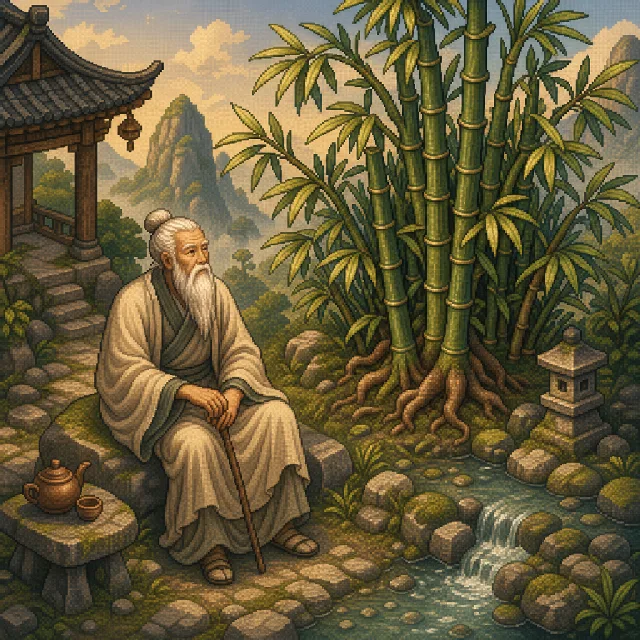
Tao Te Ching
A brief Taoist classic on the Way, simplicity, softness, and non-forcing.
About this book
The Tao Te Ching speaks in paradoxes about the Way, power, humility, emptiness, softness, government, and action without forcing. Its short chapters resist possession: the more tightly one grasps, the less one understands. The work invites a different posture toward life, one that trusts yielding, restraint, and simplicity more than domination, cleverness, or restless control.
How do you want to read?
- chapter 01150 words
This chapter opens with a paradox: the ultimate truth cannot be captured in words. It invites us to consider that what we can name is not the whole, and that desire shapes what we see.
- chapter 02217 words
This chapter explores how opposites define each other and how the sage moves beyond such distinctions. It invites us to consider a way of acting that is effortless and without attachment.
- chapter 03143 words
This chapter explores the Daoist art of governance through simplicity. The sage-ruler avoids stimulating desires, keeping the people content and uncompetitive. How does this lead to harmony?
- chapter 04142 words
This chapter explores the nature of the Tao through the metaphor of an empty vessel. It invites us to consider how aligning with its qualities can bring harmony.
- chapter 05129 words
This chapter challenges conventional ideas of benevolence, using the striking image of straw dogs to illustrate impartiality. It invites us to consider a different kind of wisdom, one that values emptiness and restraint over constant action.
- chapter 0689 words
This chapter explores the eternal feminine principle, a subtle yet powerful force at the origin of all things. Prepare to encounter a gentle, unbroken power that sustains the world without effort.
- chapter 07130 words
This chapter explores the paradox of selflessness. By observing how heaven and earth endure, we glimpse a principle that seems to invert ordinary logic.
- chapter 08155 words
Water flows to the lowest places, nourishing all without struggle. This chapter explores how such yielding humility mirrors the highest virtue. Let us see what lessons lie in the stream.
- chapter 09131 words
This chapter uses everyday objects to reveal a profound truth about balance and timing. It warns against pushing success too far, offering ancient wisdom for modern life.
- chapter 10204 words
This chapter explores the art of inner unity and effortless governance. By harmonizing soul and breath, one returns to primal simplicity. The sage mirrors the Tao's quiet nurturing.
- chapter 11118 words
This chapter explores a paradox: emptiness is what makes things useful. Through everyday examples, it shows how absence enables function.
- chapter 12115 words
This chapter warns against the excesses of sensory pleasures. It suggests that overindulgence can lead to harm and advocates for inner contentment.
- chapter 13207 words
This chapter explores the paradox of attachment to self and status. It examines how favor and disgrace both stir fear, linking them to our physical identity and personal investment.
- chapter 14218 words
In this chapter, the Tao is described as beyond perception—invisible, inaudible, and subtle. These qualities merge into the One, which cannot be named. The text invites us to consider how the ancient Tao can guide our present actions.
- chapter 15236 words
This chapter paints a portrait of the ancient Tao masters, whose depth and subtlety elude easy understanding. Their qualities are described through vivid metaphors, inviting us to contemplate the nature of true wisdom.
- chapter 16220 words
Stillness holds the key to understanding the cycle of life. This chapter explores how observing all things return to their root reveals an unchanging rule, guiding us toward wisdom and enduring peace.
- chapter 17148 words
This chapter traces the arc of governance from ideal to decline, showing how rulers' attitudes shape people's trust. It sets up a contrast between heavy-handed rule and the quiet effectiveness of those who let nature take its course.
- chapter 18109 words
This chapter explores the paradox that virtues like benevolence and loyalty only appear when the natural order has been lost. It challenges the value of these qualities by linking them to decline.
- chapter 19157 words
This chapter challenges the value of conventional wisdom and virtue, proposing their renunciation for greater social harmony. It questions whether our cleverness and moral codes truly benefit the people.
- chapter 20285 words
This chapter contrasts the sage's serene detachment with the bustling satisfaction of the multitude, exploring the subtle difference between conventional affirmations and the profound peace found in the Tao.
- chapter 21167 words
This chapter explores the elusive yet foundational nature of Tao, the source of all forms and forces. It invites reflection on how the invisible gives rise to the visible.
- chapter 22159 words
This chapter explores the paradox of opposites and the power of humility. Through ancient wisdom, it reveals how yielding leads to fulfillment and how the sage's non-striving brings true completion.
- chapter 23201 words
In this chapter, the fleeting nature of extremes is contrasted with the enduring harmony of the Tao. The text explores how agreement and faith shape our experience of the Way.
- chapter 24131 words
This chapter warns against the pitfalls of self-promotion and arrogance. Through vivid metaphors, it illustrates how forcing one's way leads to instability and lack of recognition.
- chapter 25200 words
This chapter introduces the Tao as the formless origin of all things, naming it the Great. It describes the Tao's cyclical movement and establishes a hierarchy of laws from humanity to the Tao itself.
- chapter 26138 words
In this chapter, the Daoist principle of gravity as the root of lightness is applied to rulership. The wise leader remains still and grounded, even amid movement and splendor.
- chapter 27233 words
Skillful action leaves no trace, yet saves all. The sage's effortless mastery preserves every person and thing, hiding its own light. This chapter explores how the skilled and unskilled depend on each other in a profound mystery.
- chapter 28210 words
This chapter explores the paradox of strength in gentleness, whiteness in black, and glory in disgrace. Through these contrasts, it points toward a return to simplicity and unchanging excellence.
- chapter 29148 words
This chapter warns against forceful control, comparing the kingdom to a spirit-like thing that resists seizure. It suggests that true mastery comes from letting go, not grasping.
- chapter 30175 words
This chapter explores the consequences of using force to dominate. It contrasts aggressive ambition with the restrained action of a skilled commander, setting the stage for a lesson on the natural limits of power.
- chapter 31237 words
This chapter explores the Taoist view of weapons as instruments of evil omen, and the proper attitude toward warfare and victory. It contrasts the superior man's usual peace with the grim necessity of war.
- chapter 32196 words
This chapter explores the paradox of the Tao: nameless yet powerful, simple yet commanding. It reveals how embodying the Tao leads to harmony without force, and how naming arises from action.
- chapter 33110 words
This chapter contrasts external achievements with inner mastery, urging us to look beyond surface victories. It prepares us to explore what true strength and endurance really mean.
- chapter 34183 words
The Tao flows everywhere, sustaining all things without claiming credit. The sage mirrors this humility. Can true greatness arise from not asserting greatness? This chapter reveals the paradox.
- chapter 35101 words
This chapter contrasts the fleeting appeal of music and food with the enduring utility of the Tao. It invites us to consider what truly satisfies.
- chapter 36139 words
This chapter reveals the subtle art of reversal—how apparent opposites conceal deeper strategies. It invites us to look beyond surface actions and consider the hidden dynamics of power and influence.
- chapter 37128 words
This chapter explores the paradox of non-action, where the Tao accomplishes everything by doing nothing. It invites rulers to embrace this stillness, allowing the world to transform naturally without interference.
- chapter 38309 words
This chapter explores the hierarchy of virtues, from the effortless highest virtue down to propriety, which marks the beginning of disorder. It invites reflection on what is truly solid versus what is merely ornamental.
- chapter 39299 words
This chapter traces how all things depend on the One for their existence and character. It then draws a surprising lesson about humility, showing that what seems lowly is actually the foundation of what is noble.
- chapter 4092 words
This chapter reveals the paradoxical nature of the Tao, showing how it moves through opposites and how all things arise from it. Prepare to contemplate the subtle interplay of existence and non-existence.
- chapter 41224 words
This chapter explores how people of different capacities respond to the Tao, and presents paradoxical sayings that reveal its hidden nature.
- chapter 42162 words
This chapter traces the origin of all things from the Tao, then reveals a surprising truth about humility and strength. Prepare to see how opposites work together.
- chapter 43100 words
This chapter explores the paradoxical power of softness and non-action. It suggests that yielding can overcome rigidity, and that acting without purpose may be more effective than forceful intent.
- chapter 44137 words
This chapter examines the tension between worldly pursuits and lasting peace. It asks us to weigh what we truly value, preparing the ground for a simple but profound insight.
- chapter 45110 words
Stillness and emptiness hold hidden power. The sage appears weak yet remains strong, clumsy yet skilled. This chapter explores how paradox reveals the path to enduring vigor.
- chapter 46125 words
This chapter explores the contrast between a world aligned with the Tao and one driven by ambition. It suggests that true peace arises from contentment, while discontent leads to disaster.
- chapter 47101 words
This chapter explores the paradox of knowing without seeking, suggesting that true understanding comes from within rather than from external experience.
- chapter 48111 words
This chapter contrasts the path of learning with the way of the Tao, exploring how true mastery comes not from accumulation but from letting go. It invites us to consider the power of non-action.
- chapter 49142 words
The sage does not cling to a fixed mind but aligns with the people. This chapter explores how impartial goodness and sincerity transform all, regardless of their character.
- chapter 50203 words
This chapter explores how our attitudes toward life and death shape our vulnerability. It categorizes different approaches and introduces a paradox: striving too hard to live can lead to death.
- chapter 51197 words
In this chapter, we explore how the Tao gives rise to all things and how they naturally honor it. The text reveals a profound relationship of spontaneous reverence, without any command or coercion.
- chapter 52195 words
This chapter explores the Tao as the mother of all things, teaching how knowing the origin and guarding its qualities leads to safety and strength. The verses offer practical guidance for inner clarity and lasting peace.
- chapter 53144 words
This chapter contrasts the simplicity of the Tao with the distractions of worldly display. It warns against the allure of pomp and the neglect of true substance.
- chapter 54190 words
This chapter explores how the practice of Tao yields lasting benefits that spread from the individual to the entire kingdom. It introduces a method of observation to verify this universal efficacy.
- chapter 55201 words
In this chapter, the sage compares one who holds the Tao to an infant—soft, weak, yet perfectly harmonious. The metaphor unfolds to reveal the paradox of true strength.
- chapter 56142 words
This chapter explores the paradox of knowing and speaking, inviting us to consider the nature of true wisdom. It describes the qualities of one who embodies the Tao, moving beyond conventional distinctions.
- chapter 57212 words
This chapter explores the paradox of governance through non-action. It contrasts strict laws and cunning with the transformative power of stillness, setting up a radical claim about natural order.
- chapter 58186 words
This chapter explores the paradox that the best governance appears non-interventionist. It warns that happiness and misery are intertwined, and that forceful correction can backfire. The sage's balanced conduct offers a model for wise action.
- chapter 59152 words
In this chapter, Laozi extols moderation as the supreme virtue for aligning with the Tao. He describes a chain of benefits leading from restraint to enduring stability.
- chapter 60147 words
How does a ruler govern without force? This chapter uses the image of cooking small fish—too much stirring ruins the dish—to introduce a principle of restraint that keeps both spirits and sages from harming the people.
- chapter 61174 words
This chapter explores how a great state can attract smaller ones through humility and stillness, using the female as a metaphor. The text argues that lowliness, not dominance, is the key to unity.
- chapter 62219 words
This chapter explores the unparalleled value of the Tao, which surpasses all material offerings and embraces both good and bad alike. It challenges us to consider what makes the Tao so precious.
- chapter 63202 words
This chapter explores the paradox of effortless action. It suggests that true mastery lies in attending to small beginnings and anticipating difficulties before they arise.
- chapter 64265 words
This chapter explores the power of prevention and the wisdom of acting before problems arise. It contrasts the sage's non-interference with common failures, using vivid metaphors from nature.
- chapter 65180 words
This chapter challenges conventional wisdom about governance, suggesting that knowledge may hinder rather than help. The ancient Taoists advocated for simplicity and ignorance in the people, a radical idea that sets the stage for a deeper exploration of leadership.
- chapter 66153 words
This chapter uses the image of rivers and seas to explore how humility leads to true leadership. The sage ruler gains the people's support by placing himself below and behind them.
- chapter 67221 words
In this chapter, Laozi explains why the Tao appears inferior to other teachings, precisely because of its greatness. He then reveals three precious qualities he holds dear.
- chapter 68145 words
In this chapter, we explore the paradox of true strength: it does not come from aggression or confrontation. The sage follows Tao by remaining humble and non-contending, yet achieves a power that unites others.
- chapter 69177 words
In this chapter, the master of war speaks of preferring defense over offense, retreat over advance. The paradoxical wisdom of acting where there is no enemy is explored.
- chapter 70151 words
This chapter explores the paradox of simple wisdom that remains unheeded. The speaker laments that his teachings are easy yet ignored, setting the stage for a reflection on why people fail to grasp profound truths.
- chapter 71123 words
This chapter explores the paradox of knowledge and ignorance, distinguishing true wisdom from the delusion of false certainty. It sets the stage for understanding how the sage navigates this subtle boundary.
- chapter 72129 words
This chapter explores the consequences of misplaced fear and the dangers of thoughtless indulgence. It contrasts the common person's weariness with the sage's self-knowledge and humility.
- chapter 73168 words
This chapter contrasts the outcomes of daring and not daring, pointing to a deeper principle beyond human judgment. Heaven's way operates subtly yet inevitably, raising the question of how we align with it.
- chapter 74133 words
This chapter challenges the ruler's reliance on fear and punishment. It questions whether threats of death hold any power over a fearless people.
- chapter 75148 words
This chapter explores the roots of social suffering, tracing famine, unruliness, and disregard for death back to excessive governance and harsh conditions. It invites reflection on the value of life itself.
- chapter 76151 words
This chapter explores the paradox of strength and weakness through the lens of life and death. It uses natural imagery to contrast the suppleness of living things with the rigidity of the dead.
- chapter 77188 words
This chapter compares the Way of Heaven to the bending of a bow, revealing a natural principle of balance. It sets up a contrast between heavenly and human ways, inviting reflection on how a sage aligns with the Tao.
- chapter 78134 words
Water teaches that softness overcomes hardness, yet few live this truth. The chapter explores this paradox through a sage's words on leadership and reproach.
- chapter 79144 words
This chapter explores the lingering resentment that can remain even after a conflict is resolved, and offers a sage's perspective on how to handle agreements with grace.
- chapter 80223 words
In this chapter, the philosopher outlines an ideal small state where simplicity and self-sufficiency reign. The people live contentedly without advanced technology or warfare, isolated from neighbors.
- chapter 81146 words
This chapter challenges common assumptions about eloquence, skill, and knowledge, contrasting them with deeper truths. It then reveals the paradox of the sage who gains by giving and acts without striving.
- chapter 01150 words
- chapter 0172 words
This chapter opens with a paradox: the Tao that can be named is not the true Tao. It invites us to consider what lies beyond words and concepts, preparing the mind for a deeper inquiry into the nature of reality.
- chapter 0256 words
This chapter explores how all ideas depend on their opposites. It invites us to see the subtle wisdom in acting without forcing outcomes.
- chapter 0367 words
In this chapter, the sage's method of governance is explored—how simplicity and contentment can create harmony. The focus is on reducing desires and strengthening the body.
- chapter 0468 words
The Tao is like an empty vessel, yet it is the source of all things. This chapter explores how we can align with its nature by softening our edges.
- chapter 0584 words
This chapter explores the impartial nature of heaven, earth, and sages, who act without personal bias. It introduces a striking metaphor to illustrate how emptiness can hold great power.
- chapter 0676 words
This chapter returns to the image of the valley, a symbol of receptivity and life. It speaks of a spirit that never dies, a mystery that births all things. The words are few but deep, inviting stillness.
- chapter 0763 words
This chapter explores how selflessness leads to endurance. By observing nature's example, we glimpse a paradox that challenges our usual instincts.
- chapter 0886 words
In this chapter, water becomes a mirror for the highest virtue. It flows without effort, nourishing everything while staying low. As we explore this metaphor, consider how humility and non-contention might shape a life of true excellence.
- chapter 0977 words
As we near the end of our journey, this chapter offers a quiet reflection on knowing when to stop. It reminds us that fullness invites loss, and that true wisdom lies in restraint.
- chapter 1074 words
This chapter explores the art of unifying inner forces and governing without force. It invites us to consider how true harmony arises not from control but from letting be.
- chapter 1151 words
This chapter explores how emptiness enables usefulness. Through simple examples, it reveals that what is not there often provides the function.
- chapter 1263 words
This chapter explores the dangers of sensory indulgence and the wisdom of inner contentment. It contrasts fleeting pleasures with lasting satisfaction, inviting reflection on where true fulfillment lies.
- chapter 1383 words
This chapter explores the fear that comes with favour and disgrace, linking it to attachment to self. It then offers a profound insight into governance.
- chapter 1478 words
This chapter invites us to consider the Tao as beyond our senses, yet intimately connected to the present. It suggests that by tracing back to its ancient source, we can find guidance for today.
- chapter 1572 words
In this chapter, we glimpse the elusive nature of ancient Tao masters and their profound wisdom. Through stillness and humility, they found clarity and renewal.
- chapter 1675 words
This chapter invites us to explore the profound stillness at the heart of existence. By quieting the mind, we witness the natural return of all things to their source.
- chapter 1758 words
This chapter explores the qualities of ideal rulers, contrasting them with less effective leaders. It invites reflection on how true authority often goes unnoticed.
- chapter 1863 words
As harmony fades, virtues appear—not as signs of goodness, but as symptoms of loss. This chapter reveals how the Tao's absence gives rise to artificial order.
- chapter 1963 words
This chapter challenges the value of conventional wisdom and virtue, suggesting they may disrupt natural harmony. It invites us to consider simplicity as a path to genuine goodness.
- chapter 2078 words
The sage stands apart from the busy world, still and unformed like a newborn. This chapter explores the quiet value of the Tao against the noise of ordinary life.
- chapter 2191 words
This chapter invites us to contemplate the nature of Tao, the elusive source from which all forms and forces arise. We explore how it holds the essences of all things while remaining beyond grasp.
- chapter 2268 words
This chapter explores how opposites give rise to each other. It suggests that what seems incomplete can lead to wholeness, and that the sage's humble, non-striving way is the path to true fulfillment.
- chapter 2365 words
Nature's extremes are brief. This chapter reflects on impermanence and the steady path of the Tao. What happens when we align with it?
- chapter 2466 words
This chapter contrasts self-display and self-assertion with the Tao, using vivid imagery to illustrate their undesirability. It warns against behaviors that undermine true stability.
- chapter 2598 words
Before the world took shape, something formless and whole already was. This chapter names that eternal origin and traces the order of all things back to its own nature.
- chapter 2682 words
In this brief chapter, the text contrasts gravity with lightness and stillness with movement. It sets up a principle about leadership that will be applied directly to the ruler.
- chapter 2786 words
In this brief chapter, the sage's saving of all is likened to effortless skill. The text hints at a hidden method and a mutual reliance between the skilled and unskilled.
- chapter 2866 words
This chapter explores the paradox of strength through softness and simplicity. It shows how embracing humility while possessing power leads to lasting excellence.
- chapter 2965 words
This chapter explores the elusive nature of the Dao and the futility of forceful control. It suggests that the kingdom, like the Dao, cannot be grasped by aggressive action.
- chapter 3066 words
This chapter explores the paradox of mastery: how decisive action without aggression aligns with the Tao. It warns against the pride that follows victory.
- chapter 3173 words
This chapter confronts the grim necessity of weapons and war. It warns against glorifying conflict, urging a reluctant, sorrowful approach even in victory.
- chapter 3281 words
This chapter explores the paradox of the nameless Tao and its manifestation through action. It invites reflection on how embracing simplicity leads to harmony.
- chapter 3379 words
This chapter draws a clear line between external achievements and inner mastery. It challenges us to look beyond what we conquer in the world to what we conquer within ourselves.
- chapter 3458 words
The Tao flows everywhere, yet never boasts of its work. How can we mirror this humility? Let us explore the paradox of effortless influence.
- chapter 3548 words
This chapter contrasts fleeting pleasures with the enduring Tao. Though plain, the Tao offers boundless utility. Let’s explore its quiet power.
- chapter 3660 words
This chapter distills a paradox: softness prevails over hardness. It then warns against revealing the tools of governance. The teaching is simple yet profound.
- chapter 3754 words
This chapter explores the paradox of non-action. It suggests that true power lies in letting go of deliberate effort.
- chapter 38118 words
In this chapter, the Tao Te Ching contrasts true virtue with its lesser forms. The highest virtue acts without effort, while lower virtues emerge only when the Tao is lost. This sets the stage for a reflection on what is essential.
- chapter 39113 words
This chapter explores how all things arise from the One and return to it. It reveals a paradox: true dignity is grounded in humility, and the highest honor comes from embracing lowliness.
- chapter 4063 words
This chapter explores the paradoxical nature of the Tao, revealing how its movement through opposites gives rise to all things. Prepare to contemplate the origin of existence itself.
- chapter 4176 words
This chapter explores how different minds receive the Tao. Some embrace it fully, while others mock it. Yet the Tao remains hidden and nameless, quietly perfecting all things.
- chapter 4282 words
In this chapter, the Tao's creative unfolding is described, from the One to the myriad things. We are invited to consider how humility and yielding align with the Way, while force and aggression lead to ruin.
- chapter 4356 words
In this chapter, we explore the paradox of softness prevailing over hardness. The teaching unfolds through the principle of non-action, inviting us to reconsider strength.
- chapter 4462 words
This chapter contrasts the pursuit of fame and wealth with the value of life itself. It suggests that true security comes not from accumulation but from contentment.
- chapter 4557 words
In this chapter, paradoxical wisdom reveals how stillness and purity hold greater power than activity. The text invites us to consider that true strength lies in calmness.
- chapter 4674 words
In this chapter, Laozi contrasts a world aligned with the Tao against one driven by ambition. He reveals how discontent leads to ruin, while contentment brings lasting peace. The teaching is simple yet profound.
- chapter 4769 words
This chapter explores a paradox: true knowledge arises not from outward seeking but from inner stillness. How can understanding come without action? The text invites us to reconsider the source of wisdom.
- chapter 4866 words
This chapter explores a profound paradox: the path of Tao involves letting go of deliberate action. Each day, we release a little more, moving toward a state of effortless effectiveness.
- chapter 4988 words
The sage does not cling to a fixed viewpoint. Instead, he opens his heart to the minds of all people, embracing each with equal care. This chapter explores the radical trust in universal goodness.
- chapter 5065 words
This chapter contrasts two approaches to life and death. One leads to vulnerability, the other to invulnerability. The key difference lies in where we place our efforts.
- chapter 5171 words
As we approach this verse, we consider the quiet power of the Tao. It gives life without grasping, and all things respond naturally. The chapter reveals a mystery of effortless creation.
- chapter 5282 words
This chapter explores the Tao as the nurturing source of all existence. It invites us to consider how embracing this origin can guide our actions and inner life.
- chapter 5368 words
This chapter warns against the pursuit of luxury at the expense of essential duties. It contrasts the straightforward path of the Tao with the deceptive allure of by-ways.
- chapter 5469 words
This chapter explores how the practice of Tao brings increasing benefits from the individual to the entire kingdom. It introduces a method of observation to verify these effects.
- chapter 5565 words
This chapter draws a gentle comparison between the sage and an infant, exploring how true strength arises from softness and harmony, not force.
- chapter 5659 words
This chapter explores the paradox of the wise: those who truly know do not speak. It points to a state beyond ordinary distinctions, inviting quiet reflection.
- chapter 5771 words
This chapter contrasts two approaches to governance: one of forceful intervention and one of non-action. It suggests that simplicity and restraint may yield better outcomes than complex rules.
- chapter 5854 words
Governance that seems unwise may bring true good. Happiness and misery intertwine. The sage's way is gentle, avoiding harshness.
- chapter 5974 words
This chapter explores how moderation allows us to return to the Tao early, fostering stability and endurance. It presents a chain of cause and effect from personal restraint to lasting rule.
- chapter 6080 words
In this brief chapter, Laozi offers a profound analogy for governance. The image of cooking small fish warns against excessive handling. Prepare to see how non-interference aligns with the Tao.
- chapter 6170 words
Stillness and humility can be powerful forces. This chapter explores how a great state attracts smaller ones by adopting a lowly posture, like a stream drawing water.
- chapter 6285 words
This chapter reflects on the supreme value of the Tao, which surpasses all earthly treasures and extends its grace to everyone, regardless of their deeds.
- chapter 6375 words
This chapter reveals how the sage achieves great results by starting small and acting without force. It invites us to consider the power of addressing things when they are easy.
- chapter 6473 words
This chapter emphasizes the value of preventive action and consistent care. It contrasts the sage's selfless approach with common failures due to wavering attention.
- chapter 6586 words
In this chapter, the Taoist perspective on governance is presented, contrasting wisdom with simplicity. The text warns against using knowledge to rule, suggesting that true excellence lies in mystery.
- chapter 6673 words
This chapter explores a paradox of leadership: how humility and yielding can elevate a ruler. Through the image of rivers and seas, we see the power of placing oneself below others.
- chapter 6769 words
In this chapter, we explore a paradox: the Tao's greatness makes it seem inferior. We then encounter three simple yet powerful qualities that are deeply valued.
- chapter 6862 words
In this chapter, we explore how a true follower of Tao behaves in conflict—not through force or anger, but through restraint and humility.
- chapter 6970 words
This chapter warns against the folly of rash warfare, urging restraint. It presents a paradox: true victory comes from those who lament the necessity of conflict.
- chapter 7065 words
We hear a lament: wisdom is simple, yet few follow it. The sage's hidden worth contrasts with outward humility. This chapter explores why truth is ignored.
- chapter 7177 words
This chapter explores the paradox of knowledge and ignorance. It distinguishes true wisdom from the affliction of false certainty, setting the stage for a deeper understanding of the sage's perspective.
- chapter 7266 words
This chapter explores the balance between fear and self-awareness. It warns against misplaced fears and thoughtless indulgence, contrasting ordinary behavior with the sage's quiet self-knowledge.
- chapter 7367 words
This chapter explores the effortless power of Heaven's way, contrasting human striving with the natural order. It invites reflection on how the universe operates without force, yet nothing escapes its reach.
- chapter 7468 words
This chapter questions the effectiveness of using death as a threat. It suggests that when people are unafraid to die, such threats lose their power.
- chapter 7572 words
This chapter explores the roots of social suffering, linking famine and unrest to excessive taxation and over-governance. It challenges conventional wisdom by suggesting that detachment from life may be preferable.
- chapter 7653 words
This chapter explores the paradox of strength and weakness, using the natural world to reveal a deeper truth about vitality and rigidity.
- chapter 7767 words
This chapter explores the natural balance of the Tao, using the metaphor of a drawn bow. It contrasts heaven's impartiality with human tendencies, setting the stage for a lesson on humility.
- chapter 7868 words
Water, the softest substance, carves through stone. This chapter explores how yielding strength and accepting criticism lead to true mastery.
- chapter 7967 words
After making peace, old hurts can persist. This chapter explores how the wise handle lingering resentment and the unfinished business of broken agreements.
- chapter 8080 words
This chapter explores the vision of a small, self-contained state where simplicity and isolation define daily life. It invites reflection on what it means to find contentment without reliance on technology or external connections.
- chapter 8177 words
This chapter draws a sharp line between surface elegance and genuine truth. It questions the value of polished speech and offers a glimpse into a way of living that defies accumulation.
- chapter 0172 words
- The Way and Its Power505 words
This chapter explores the paradox of opposites and the power of humility. Through ancient wisdom, it reveals how yielding leads to fulfillment and how the sage's non-striving brings true completion.
- The Way and Its Power505 words
Related works
Cultural pair
- The Analects
De Tao Te Ching zoekt kracht in niet-forceren; de Analecten zoeken vorm in ritueel, karakter en sociale plicht.
Maybe next
- Zhuangzi
De Tao Te Ching geeft de korte paradoxen van niet-forceren; Zhuangzi laat die wijsheid uitwaaieren in verhalen, humor en omkering.