Notes from Underground
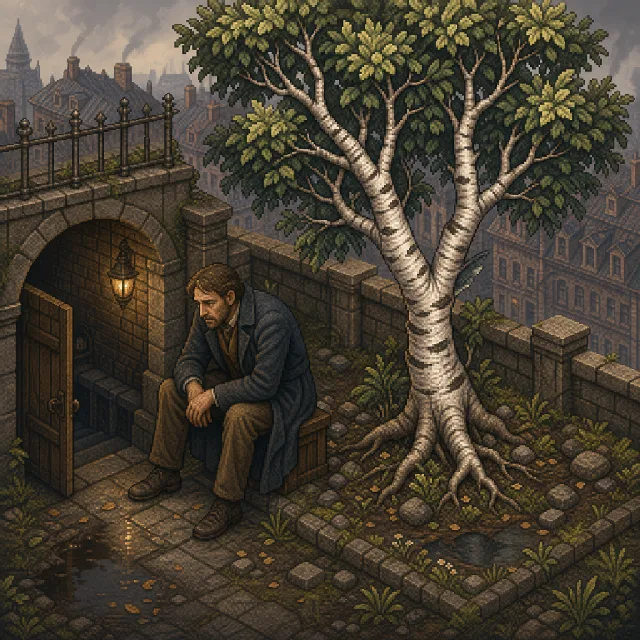
Notes from Underground
Dostoevsky's bitter monologue against rational certainty and self-deception.
About this book
Notes from Underground gives voice to a resentful, brilliant, self-sabotaging narrator who attacks the dream that human beings can be explained or improved by reason alone. His confession is ugly, comic, and painfully modern. The book matters because it turns alienation into philosophical drama, asking why people cling to freedom even when they use it to wound themselves and others.
How do you want to read?
- XI64 words
As we step into Part II, the scene shifts to a world softened by wet snow. This new setting promises to reveal deeper layers of the story, where every footprint tells a tale.
- X202 words
As the author sets the stage, we meet a fictional yet disturbingly real figure. This character embodies a mindset born from the pressures of modern society, preparing us for a raw exploration of his inner world.
- I1209 words
In this chapter, the narrator reveals the depths of his spite and self-contradiction. He refuses medical help out of sheer malice, yet admits his actions harm only himself. His confession sets the stage for a deeper exploration of his character.
- II1301 words
The narrator insists that excessive consciousness is a disease, one that traps him in inertia and perverse enjoyment of his own degradation. He challenges the reader to understand this condition, setting the stage for a deeper exploration of his paralysis.
- III1610 words
In this chapter, the underground man sharpens his contrast between the decisive 'normal man' and the tormented 'mouse' of acute consciousness. He explores the peculiar, perverse enjoyment that arises from conscious impotence against the unyielding laws of nature.
- IV671 words
This chapter explores the strange satisfaction found in suffering, using toothache as a vivid example. The narrator argues that even pain can yield a perverse pleasure, one rooted in malice and self-awareness.
- V1040 words
The narrator continues his confession, dissecting the paralysis that comes with self-awareness. He explores how consciousness, rather than empowering action, traps him in endless reflection and inaction.
- VI547 words
In this chapter, the narrator explores the paradoxical appeal of embracing laziness as a defining identity. He imagines how being called a 'sluggard' could provide a sense of purpose and self-respect.
- VII2118 words
As the chapter unfolds, the narrator challenges the notion that humans always act in their rational self-interest, hinting at a deeper, more capricious drive that defies logic and systems.
- VIII1991 words
In this chapter, the Underground Man confronts the idea that science could one day reduce all human desires to a formula. He argues that even then, people would rebel against such determinism, choosing irrationality to assert their freedom.
- IX1150 words
The Underground Man sharpens his attack on rational self-interest, arguing that humans love the process of striving more than achieving goals. He suggests that suffering and chaos are secretly prized, setting up a provocative defense of caprice over certainty.
- X704 words
The narrator continues his assault on the rational utopia, rejecting any compromise that would silence his desires. He insists that a perfect crystal palace is worthless if it cannot accommodate his will to rebel.
- XI1438 words
As the chapter opens, the Underground Man continues his paradoxical defense of inertia, admitting his own lies and preparing to shift from abstract philosophy to a concrete memory.
- I, part 14621 words
The narrator, now twenty-four, describes his isolated life and deep self-loathing. He hates his face, fears being ridiculous, and believes every decent person must be a coward and a slave. His obsession with an officer who once moved him aside begins to consume him.
- I, part 2264 words
The narrator describes a final, decisive encounter that brings a long-sought resolution. The outcome hinges on a single moment of unexpected action.
- II1774 words
The narrator emerges from a period of dissipation into a world of vivid dreams, where he escapes into fantasies of heroism and the sublime. These dreams offer a refuge from his squalid reality, but they also deepen his internal conflict.
- III3538 words
The narrator, driven by a compulsive need to assert himself, forces his way into a dinner party for a man he despises. As he prepares, his mind churns with memories of school and fears of humiliation.
- IV3441 words
The narrator arrives early for a dinner party, only to find the hour changed. He waits alone, humiliated, as the others arrive late and treat him with condescension.
- V1782 words
As the underground man hurtles through the snowy night, his mind churns with plans of revenge and self-destruction. He is determined to confront Zverkov, yet doubts and literary fantasies cloud his resolve.
- VI3733 words
The underground man wakes in the dark, cramped room, his mind heavy with the previous day's events. Liza's eyes meet his, cold and searching, as an uneasy silence settles between them.
- VII2962 words
In this chapter, the Underground Man delivers a brutal lecture to Liza about the horrors of prostitution, painting a grim future. His words are meant to shock, but they also reveal his own cruelty and self-loathing.
- VIII3883 words
As the narrator wakes from a restless sleep, he recoils at his own sentimentality and scrambles to restore his reputation. Yet beneath his frantic efforts, the memory of Liza’s face lingers, a quiet threat to his carefully constructed composure.
- IX2744 words
The narrator's confession reaches its peak, laying bare his spite and need for power. As Liza absorbs his cruelty, a strange shift occurs—her understanding pierces through his defenses, setting the stage for an unexpected turn.
- X1985 words
As the chapter opens, the narrator's inner turmoil intensifies after Liza's departure. He grapples with his own cruelty and the impossibility of love, setting the stage for a painful reckoning with his underground philosophy.
- XI64 words
- XI72 words
This chapter marks a shift in the narrative, introducing a new part with a title that hints at a change in atmosphere or perspective. Prepare for a transition in tone and setting.
- X105 words
In this chapter, the author sets the stage by clarifying that the diary and its protagonist are fictional, yet they represent a type of person that exists in society. This prepares us to explore a character from the recent past without expecting a literal account.
- I232 words
The narrator introduces himself with a confession of sickness and spite. He reveals a deep inner conflict, unable to become anything definite. This chapter explores his refusal to act and his paradoxical pride in being a characterless man.
- II235 words
This chapter explores the paradox of heightened self-awareness, where consciousness becomes a paralyzing force rather than a path to virtue. The narrator dissects the peculiar pleasure found in acknowledging one's own degradation.
- III157 words
We now meet the underground man's two archetypes: the simple normal man and the tortured mouse. The mouse's strange pleasure emerges from conscious impotence against necessity.
- IV148 words
This chapter explores a paradox: the strange pleasure found in suffering. Without revealing the outcome, it invites us to consider how pain can become a source of perverse enjoyment.
- V209 words
The narrator dissects the paralysis that comes with acute self-awareness. He argues that consciousness, rather than empowering action, traps the intelligent in endless reflection, making every motive suspect and every beginning impossible.
- VI112 words
In this chapter, the narrator explores a paradoxical idea: that laziness could be a positive identity. He imagines how embracing the label 'sluggard' might bring purpose and self-respect.
- VII438 words
What if the deepest human drive is not reason or self-interest, but the sheer desire to choose? This chapter challenges the idea that we always act for our own good, hinting at a wilder, more stubborn motive.
- VIII268 words
As the Underground Man continues his rebellion, he turns to the very nature of desire. What if science could map every human wish? He argues that even then, we would choose irrationality to prove we are more than predictable keys.
- IX156 words
The Underground Man questions whether rational self-interest truly serves humanity, hinting at a deeper, more chaotic drive within us all.
- X186 words
The narrator confronts a vision of perfect order, rejecting any utopia that demands the sacrifice of his deepest desires. He insists on the freedom to rebel, even against reason itself.
- XI291 words
The Underground Man declares his preference for conscious inertia, yet admits he is lying. He prepares to recount an early memory, prompted by the dreary snow. What follows is a story born of boredom and a desire for self-examination.
- I, part 1308 words
At twenty-four, the narrator's life is marked by isolation and vanity. He despises his colleagues yet fears them, and a chance encounter with an officer ignites a long-standing obsession.
- I, part 2114 words
As the chapter opens, the narrator recounts a deliberate collision with an officer. The moment is charged with a sense of vindication and a claim to equality. What follows is a reflection on dignity and the lengths one goes to preserve it.
- II249 words
The narrator retreats into dreams of heroism after bouts of dissipation, finding solace in fantasies of the sublime and beautiful. He describes the rhythm of his inner life, alternating between lofty visions and mundane visits to acquaintances.
- III360 words
The narrator forces himself into a dinner party he knows he is not wanted at, driven by a compulsion he cannot explain. As he prepares, old wounds and bitter memories resurface, setting the stage for a painful confrontation.
- IV266 words
The narrator arrives early, only to face humiliation and mockery. As the evening spirals, he drinks heavily and makes a scene, setting the stage for a desperate act of self-degradation.
- V244 words
The underground man hurtles toward a confrontation, driven by a sense of duty and absurd plans. His frantic journey leads him to an unexpected place, where reality shifts and a new encounter awaits.
- VI302 words
In the dim morning light, the underground man awakens to find Liza's gaze upon him. He begins a speech that will reveal the depths of his own contradictions.
- VII1342 words
The Underground Man's cruelty sharpens into a weapon. He paints Liza's future in vivid, brutal strokes, forcing her to see the degradation ahead. His words are a trap, and she falls into it.
- VIII422 words
As the narrator wakes from a heavy sleep, he is determined to mend his reputation with his peers, but a nagging conscience and the memory of Liza's tortured face unsettle his resolve.
- IX280 words
As the chapter opens, the narrator stands before Liza, torn between fury and shame. Their confrontation escalates, revealing the raw, ugly motives behind his earlier cruelty.
- X356 words
As the chapter unfolds, the narrator's inner turmoil reaches a peak, forcing him to confront his own cruelty and the hollow nature of his underground existence.
- XI72 words
- The Underground Man's Philosophy of Spite and Consciousness1466 words
As we step into Part II, the scene shifts to a world softened by wet snow. This new setting promises to reveal deeper layers of the story, where every footprint tells a tale.
- Encounters with the World: From Revenge to Failed Connection1372 words
The underground man, now twenty-four, recounts his isolated life and obsessive need for recognition. His encounters with an officer and old schoolmates reveal the depths of his self-loathing and pride.
- The Underground Man's Philosophy of Spite and Consciousness1466 words
Related works
Maybe next
- Crime and Punishment
De ondergrondse man klinkt als een donkere voorbereiding op Crime and Punishment: ressentiment wordt later daad en schuld.
Countervoices
- Beyond Good and Evil
De ondergrondse man is geen Nietzscheaan, maar hij maakt voelbaar waarom moraal en rede niet simpelweg bevelen.
- The Republic
De ondergrondse stem is een donkere tegenproef voor Plato: wat als de mens liever tegenspreekt dan harmonieus wordt?