The Virtuous City
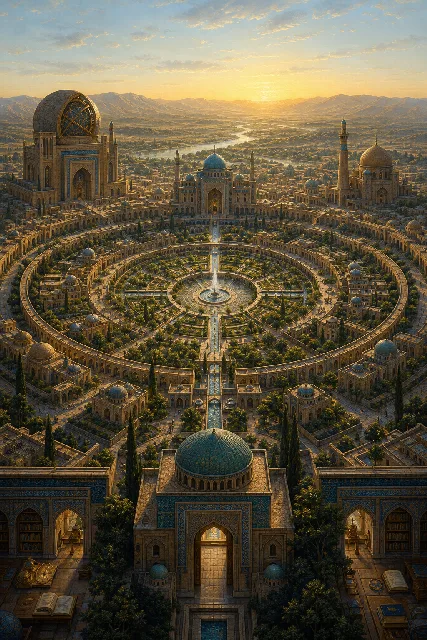
The Virtuous City
A philosophical vision of the city ordered toward human flourishing.
About this book
Al-Farabi imagines the virtuous city as a community arranged around knowledge, moral formation, and the pursuit of true happiness. Drawing on Plato and Aristotle while speaking from an Islamic philosophical world, he links politics to metaphysics and education. The result is not a practical constitution, but a demanding portrait of what rule, citizenship, and wisdom would look like if a society were ordered toward the highest good.
How do you want to read?
- DIE PRINCIPIEN DER ANSICHTEN YON DEN, Part 14481 words
This chapter explores the nature of the First Being, examining its perfection, unity, and role as the uncaused cause. The discussion lays the foundation for understanding divine attributes, though the full picture may challenge human comprehension.
- DIE PRINCIPIEN DER ANSICHTEN YON DEN, Part 24657 words
Having established the First as the ultimate source, we now trace how all existence emanates from it through a chain of immaterial intellects and celestial spheres down to the material world.
- DIE PRINCIPIEN DER ANSICHTEN YON DEN, Part 34545 words
This chapter explores the nature of heavenly bodies and their motions, tracing how celestial influences give rise to the material world and its forms. It then examines the emergence of life and the human soul, setting the stage for a deeper understanding of existence.
- DIE PRINCIPIEN DER ANSICHTEN YON DEN, Part 44517 words
This chapter explores the intricate hierarchy of bodily powers, from nutrition to thought, and how they unite as one soul. It traces the relationships between ruling and serving members, culminating in the heart's primacy and the brain's mediating role.
- DIE PRINCIPIEN DER ANSICHTEN YON DEN, Part 54442 words
This chapter explores the active intellect, will, happiness, dreams, prophecy, and the virtuous city. Farabi explains how the soul achieves perfection and why human cooperation is essential.
- DIE PRINCIPIEN DER ANSICHTEN YON DEN, Part 64401 words
This chapter explores the ideal state as a living organism, where the leader mirrors the heart's role in the body. It examines the natural and voluntary qualities that bind citizens, setting the stage for a detailed discussion of leadership and the soul's perfection.
- DIE PRINCIPIEN DER ANSICHTEN YON DEN, Part 74344 words
As souls depart from bodies, their union and joy intensify without limit. This chapter explores how happiness is classified and how souls in ignorant cities suffer eternal misery.
- DIE PRINCIPIEN DER ANSICHTEN YON DEN, Part 84126 words
This chapter explores diverse views on the foundations of human association and the nature of justice, questioning whether it arises from natural superiority or from fear and weakness.
- DIE PRINCIPIEN DER ANSICHTEN YON DEN, Part 9360 words
This chapter explores the logical consequences of opposites and their coexistence. It examines how positing contradictory terms leads to profound implications for truth and absurdity, setting the stage for a rigorous philosophical argument.
- DIE PRINCIPIEN DER ANSICHTEN YON DEN, Part 14481 words
- DIE PRINCIPIEN DER ANSICHTEN YON DEN, Part 11011 words
This chapter introduces the First Being as the perfect, uncaused cause of all existence. It explores its unique attributes: indivisibility, self-intellecting nature, and the difficulty humans face in comprehending such perfection.
- DIE PRINCIPIEN DER ANSICHTEN YON DEN, Part 2937 words
This chapter traces the chain of being from the First Cause through intellects and spheres to matter. Each level emanates necessarily, revealing a universe ordered by substance and thought.
- DIE PRINCIPIEN DER ANSICHTEN YON DEN, Part 31019 words
Chapter 3 explores the motions of heavenly bodies and the generation of material forms, revealing a hidden order beneath apparent chaos. Man, though sharing in materiality, harbors something sublime.
- DIE PRINCIPIEN DER ANSICHTEN YON DEN, Part 4926 words
This chapter explores the hierarchy of bodily powers, from nutrition to intellect, and how they relate to the heart and brain. It sets the stage for understanding the soul's faculties and their material foundations.
- DIE PRINCIPIEN DER ANSICHTEN YON DEN, Part 5953 words
This chapter explores how the active intellect transforms potential into actual knowledge, the nature of will and free choice, and the path to happiness through virtue. It also examines the role of imagination in dreams and prophecy, and the necessity of social cooperation in a virtuous city.
- DIE PRINCIPIEN DER ANSICHTEN YON DEN, Part 6935 words
This chapter explores the natural order of leadership and the qualities required for a ruler, drawing parallels between the body's organs and the state's hierarchy. It sets the stage for understanding the ideal city and its potential pitfalls.
- DIE PRINCIPIEN DER ANSICHTEN YON DEN, Part 7930 words
This chapter explores the endless joy of virtuous souls united after death, and classifies happiness by kind, quantity, and quality, drawing analogies from the arts.
- DIE PRINCIPIEN DER ANSICHTEN YON DEN, Part 8868 words
Chapter 8 explores diverse views on human connection and justice, from natural superiority to deceptive agreements. It challenges us to consider what truly binds people together.
- DIE PRINCIPIEN DER ANSICHTEN YON DEN, Part 9117 words
As we delve deeper, we confront the logical extremes of opposition. What follows challenges our assumptions about truth and absurdity, inviting us to consider a world where contradictions dissolve into necessity.
- DIE PRINCIPIEN DER ANSICHTEN YON DEN, Part 11011 words
- The First Cause and the Emanation of Existence689 words
This chapter explores the nature of the First Being, the uncaused cause of all existence, and traces the emanation of reality from the perfect One through a hierarchy of intellects and spheres down to the material world.
- Human Intellect, Virtue, and the Afterlife1245 words
This chapter explores the hierarchy of human powers, the nature of intellect and will, and the path to happiness through virtue. It also examines imagination, prophecy, and the structure of the virtuous city.
- The First Cause and the Emanation of Existence689 words
Related works
Maybe next
- The Salvation
Al-Farabi denkt de stad vanuit kosmos en intellect; Avicenna verschuift naar een systematischer onderzoek van zijn, ziel en noodzakelijkheid.
Earlier works
- Treatise on First Philosophy
Al-Farabi's ideale stad krijgt historische diepte naast Al-Kindi: eerst de vraag naar eerste filosofie, daarna de ordening van mens en gemeenschap.